
Clinical Training in BPT: Why It Matters When Choosing the Best Physiotherapy Colleges in India
Home / School of Allied Sciences / Clinical Training in BPT: Why It Matters When Choosing the Best Physiotherapy Colleges in India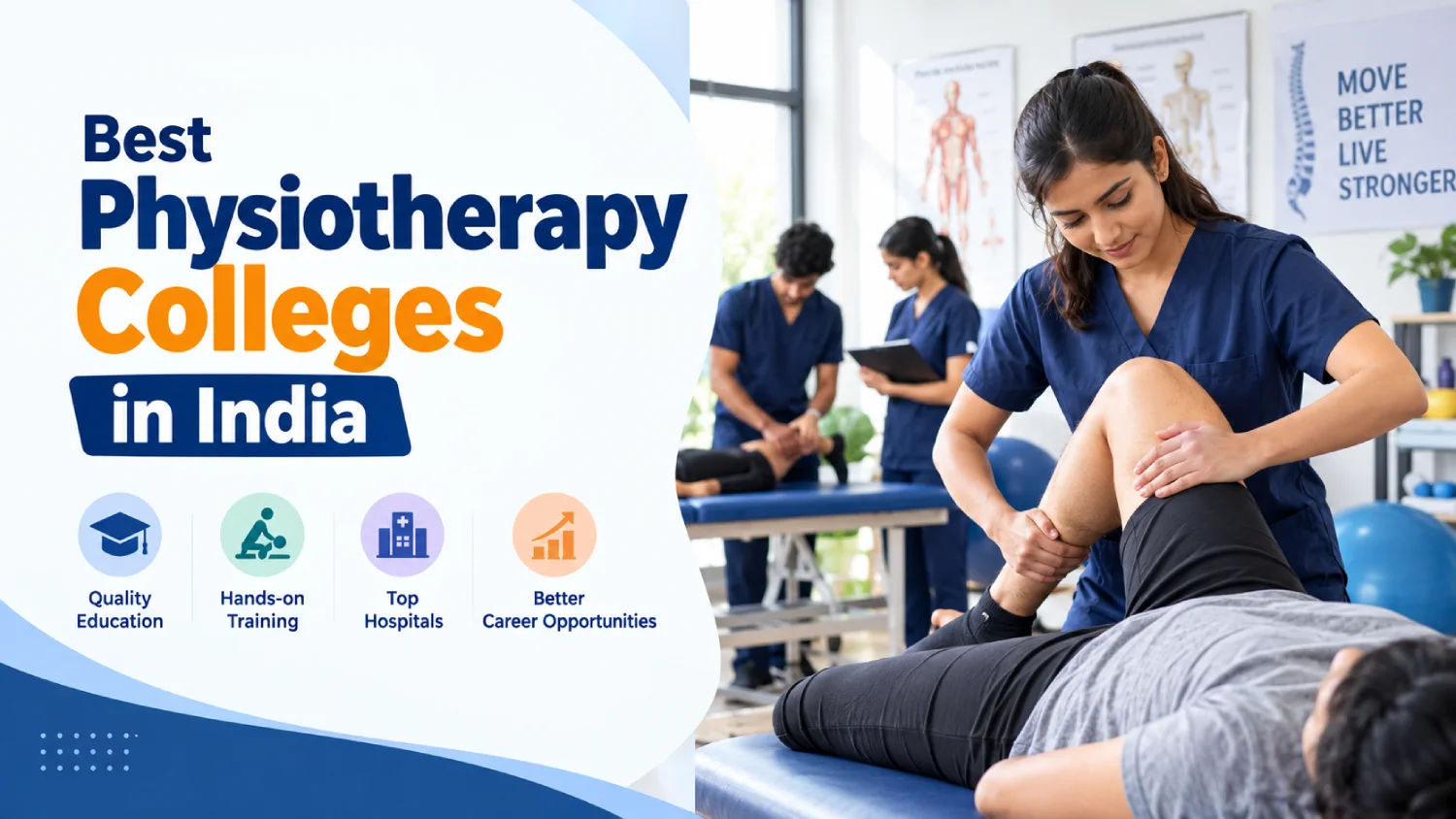
Clinical training is the part of a BPT where students treat real patients under supervision. It decides how ready a graduate is for work. Under the NCAHP curriculum released in April 2025, BPT is a five-year course: four years of study and a one-year clinical internship. The best physiotherapy colleges in India offer a teaching hospital, early patient contact and rotations across specialities. MNR University near Hyderabad runs a five-year BPT at ₹2 lakh a year, with teaching hospitals among its campus facilities.
Introduction
Stepping into the field of physiotherapy sounds good, and the curiosity pertaining to the future and career possibilities hovers in the mind of aspirants. For many students, the college search begins with fees and rankings. Ask any experienced professional in the field, and they will tell you that a good physiotherapist is made in the clinic, not the classroom. This guide explains why clinical training deserves first place on any checklist for the best physiotherapy colleges in India.
What Is Clinical Training in BPT?
Clinical training means learning physiotherapy on real patients under a qualified physiotherapist. Students assess pain, test movement, plan exercises and track recovery. The work takes place in hospital wards, outpatient clinics, intensive care units and rehabilitation centres. In practical terms, it is where a student first helps someone walk again after a fracture or breathe easier after surgery.
How Long Is BPT Under the New NCAHP Curriculum?
Not everyone is aware that the course changed recently. The National Commission for Allied and Healthcare Professions (NCAHP) released a new physiotherapy curriculum on 23 April 2025. It makes BPT a five-year course, with four years of study and a one-year clinical internship. For physiotherapy admissions, the curriculum bases entry on NEET, with the new rules in force from 2026.
Table 1: BPT Under the NCAHP Curriculum (2025)
| Point | What the curriculum says |
|---|---|
| Course length | 5 years |
| Academic study | 4 years |
| Clinical internship | 1 full year |
| Admission | Based on NEET |
| In force from | 2026 |
| Built on | WHO and ILO guidelines |
Source: Medical Dialogues, reporting the NCAHP physiotherapy curriculum (23 April 2025).
Why Does Clinical Training Matter When Choosing the Best Physiotherapy Colleges in India?
One question that often comes up is whether good marks are enough to become a good physiotherapist. The reality on the ground is somewhat different. A patient with a stroke, a slipped disc or a torn ligament rarely matches the textbook picture. From an employer’s point of view, a fresher who has already handled such cases needs less training and wins patient confidence sooner.
What Do Students Gain From Early Patient Contact?
- Confidence: taking a patient’s history and explaining exercises in simple words
- Clinical judgement: spotting warning signs and knowing when to refer a patient to a doctor
- Range: cases in orthopaedics, neurology, heart and lung care, sports injuries and care for older adults
- Job leads: supervisors often recommend good interns to hospitals and clinics
How Do the Best Physiotherapy Colleges in India Run Clinical Postings?
Strong colleges send students to the wards in small, supervised groups and rotate them through each speciality. Students keep a logbook of cases, present them to teachers and get feedback the same day. It is worth noting that a hospital on campus saves travel time, so students see patients every week instead of once a term.
What Should Students Check Before Choosing a Physiotherapy College?
Almost every brochure promises ‘hospital training’. The checklist below helps families separate the best physiotherapy colleges in India from the rest during a campus visit.
Table 2: Strong vs Weak Clinical Training
| Check | Strong sign | Warning sign |
|---|---|---|
| Hospital | Own teaching hospital on or near campus | Tie-up with a distant hospital only |
| Patient contact | Supervised cases from the early years | Patients only in the final year |
| Supervision | Small groups led by qualified physiotherapists | Large groups with little feedback |
| Specialities | Orthopaedics, neurology, cardio-respiratory, sports and paediatrics | One or two areas only |
| Internship | A full one-year rotation, as the NCAHP curriculum requires | A short or loosely planned placement |
| Labs | Exercise therapy and electrotherapy labs with current machines | Old or shared machines |
Source: Checklist based on the NCAHP curriculum (Medical Dialogues, 2025).
Physiotherapy Career Scope in India
A closer look at the industry shows a wide gap between need and supply. India has about 0.6 physiotherapists for every 10,000 people, below the WHO benchmark of one. Around 35–40 crore Indians live with chronic joint or muscle pain, and the number of older people is growing by 41% a decade. Worldwide, about 2.4 billion people have a health condition that rehabilitation can help.
Table 3: Physiotherapy Demand in Numbers
| Indicator | Figure | Source |
|---|---|---|
| Physiotherapists per 10,000 people in India | 0.59–0.6 | Careers360; Chiratae Ventures |
| WHO benchmark | 1 per 10,000 people | Careers360 |
| Physiotherapists per 10,000 people in the US | About 7.2 | Chiratae Ventures |
| Indians with chronic musculoskeletal pain | 35–40 crore | Chiratae Ventures |
| India’s physiotherapy market | ≈ ₹9,630 crore (2022) to ≈ ₹18,300 crore (2030) | Chiratae Ventures |
| People worldwide who could benefit from rehabilitation | About 2.4 billion | WHO |
Source: Careers360 (2025); Chiratae Ventures (2025); WHO. Dollar figures converted at ₹96.3 per USD (2 October 2026).
Physiotherapy Jobs and Salary in India
Graduates can choose from many career paths after BPT. They work in hospitals, private clinics, sports academies, rehabilitation centres, corporate wellness teams, home care and tele-rehab. Among physiotherapy courses, the two-year MPT is the usual next step for students who want specialist roles. Pay rises steadily with experience.
Table 4: Physiotherapist Salary in India by Stage
| Stage | Typical pay |
|---|---|
| Fresher (0–2 years) | ₹10,000–30,000 a month (₹2.2–3.5 lakh a year) |
| Mid-level (2–5 years) | ₹25,000–40,000 a month |
| Senior or specialist (5+ years) | ₹40,000–80,000 a month |
| Freelance | ₹200–1,000 a session |
| Own clinic | ₹10–20 lakh a year or above |
Source: Careers360 (updated December 2025), citing Indeed, Randstad and AmbitionBox.
Why Are Students Searching for MNR University?
There is a general notion that South India is quite ahead of others in this particular field, with the emergence of a multitude of hospital chains offering a plethora of job opportunities. Fathoming the consequence of this fact, private universities have expanded their infrastructure and facilities to attract students from different regions to study physiotherapy and explore the possibilities. MNR University, at Fasalwadi in Sangareddy (Greater Hyderabad), is one such campus.
- Teaching hospitals among its campus facilities, so patient work starts close to the classroom
- A five-year BPT programme at ₹2,00,000 a year, with merit scholarships of up to 40%
- MPT options in orthopaedics, neurology, cardiovascular and pulmonary care and sports science at the School of Allied & Healthcare Sciences, plus a PhD
- A 50+ year legacy, a Gold Sustainable Campus and the distinction of being Telangana’s first DASCA-USA accredited university
- Academic collaborations with leading US universities, plus internships and placement support
- Well-stocked labs that mirror the tools graduates will use at work
Is MNR University Among the Top Physiotherapy Colleges in Hyderabad?
Families comparing the top physiotherapy colleges in Hyderabad usually look for three things: a hospital close by, a course that follows the NCAHP format and fair fees. MNR University offers all three, which is why its BPT appears on many shortlists. A wider comparison of Hyderabad colleges is on the MNR blog.
Conclusion
It would not be wrong to say that clinical training is the backbone of a BPT degree. Fees, rankings and campus looks all count, but patient hours decide how ready a graduate feels on the first day at work. The best physiotherapy colleges in India prove this with a teaching hospital, supervised rotations and a full-year internship. Students planning physiotherapy admissions for 2027 can check MNR University’s admission process and visit the campus.
Frequently Asked Questions
It is supervised work with real patients in hospital wards, outpatient clinics and rehabilitation units, where students assess, treat and track recovery.
The best ones have a teaching hospital on or near campus, supervised patient work from the early years and a one-year internship rotation. MNR University near Hyderabad lists teaching hospitals among its campus facilities.
Five years under the NCAHP curriculum of April 2025: four years of study and a one-year clinical internship.
Yes. The NCAHP curriculum bases BPT admission on NEET from 2026. Students should also check their state's counselling rules.
Most colleges ask for Class 12 with Physics, Chemistry and Biology, plus a NEET score under the new NCAHP rules.
Families usually shortlist colleges with a hospital close by, a five-year NCAHP-format BPT and clear fees. MNR University near Hyderabad meets these checks at ₹2 lakh a year.
Wide. India has about 0.6 physiotherapists per 10,000 people, below the WHO benchmark of one, while 35–40 crore Indians live with chronic musculoskeletal pain.
Freshers usually earn ₹2.2–3.5 lakh a year. Specialists with five or more years earn ₹40,000–80,000 a month, and clinic owners can earn ₹10–20 lakh a year.
The two-year MPT is the usual next step, in areas such as orthopaedics, neurology, cardio-respiratory care and sports. A PhD suits those who want research or teaching roles.
Annual tuition is ₹2,00,000. Merit scholarships of up to 40% can bring it down to ₹1,20,000 a year.
Related Blogs
Can Average Students Build a Career in Neurosciences?
Neuroscience is one of the most rewarding fields of study in India today, and students…
B.Sc Radiology Colleges in India: Course, Jobs, Salary and Scope in 2026
Every hospital visit usually begins with a picture. A doctor studies an X-ray, a scan…

Anaesthesiology: A Fundamental Pillar of Modern Surgery
Modern healthcare relies heavily on the steady hands and technical expertise of clinical specialists during…
Best Optometry Colleges in India in 2026: A Complete Comparison Guide
Every year, thousands of students finish Class 12 with Biology and start looking past MBBS….
Optometry as a Career: What You Need to Know in 2026
There is a quiet shift happening in healthcare, and it is easy to notice if…

Top B.Optometry Colleges in Telangana 2026: Rankings, Fees and Admission Guide
Telangana has a growing number of colleges offering a Bachelor in Optometry. One of the…