
B.Sc Radiology Colleges in India: Course, Jobs, Salary and Scope in 2026
Home / School of Allied Sciences / B.Sc Radiology Colleges in India: Course, Jobs, Salary and Scope in 2026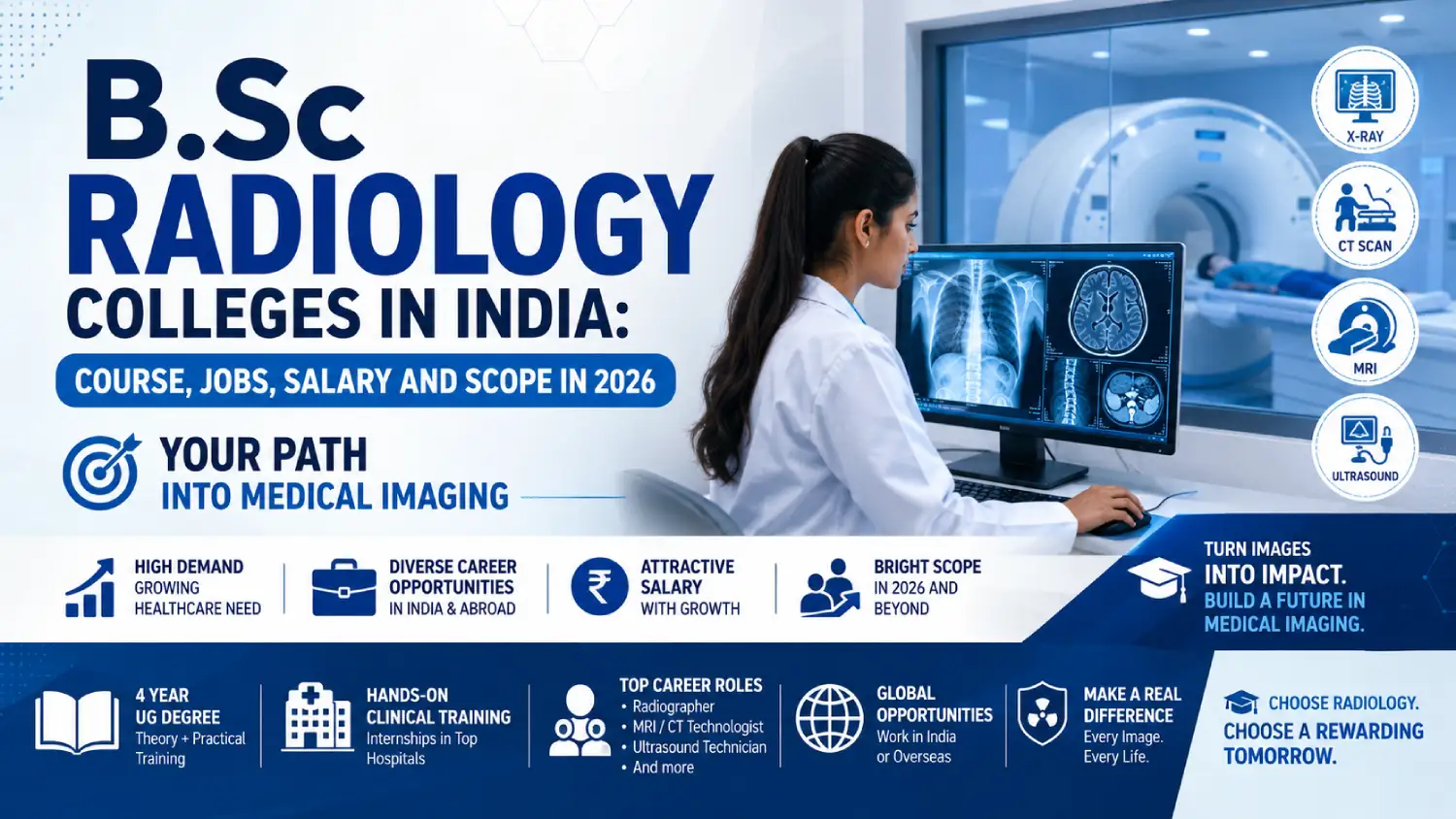
Every hospital visit usually begins with a picture. A doctor studies an X-ray, a scan or an ultrasound before deciding what comes next. Behind that picture stands a skilled professional who knows how to capture the human body in fine detail. This is the world of radiology, and it draws thousands of curious students each year.
Many young people finish Class 12 with a love for science but no wish to spend a decade in medical college. They want a healthcare role that feels real, pays well and helps people in a direct way. A B.Sc in Radiology and Imaging Technology answers that wish. It blends physics, biology and modern machines into one rewarding course.
This blog walks through what the course offers, the jobs it leads to, the salary students can expect and the scope of imaging in 2026. It also explains why MNR University in Hyderabad has become a strong choice for families who want a safe and career-focused path. Readers will find simple answers, useful data and honest guidance.
What is a B.Sc Radiology Course?
A B.Sc in Radiology and Imaging Technology is a four-year undergraduate degree. It teaches students how to operate imaging machines such as X-ray, CT, MRI and ultrasound. The course mixes classroom theory with long hours of practical work in labs and hospitals.
Students learn human anatomy, radiation physics, patient care and image reporting. By the final year, most of them spend time in real hospital settings through internships. The degree prepares them to work as radiology technologists, the people who turn a doctor’s request into a clear medical image.
Why is Radiology Important in Healthcare?
Doctors cannot treat what they cannot see. Radiology gives them eyes inside the body. A broken bone, a blocked artery or an early tumour often shows up first on a scan. Without imaging, diagnosis would slow down and many illnesses would go unnoticed.
Radiology also supports surgery, cancer care and emergency medicine. The professionals who run these machines hold real responsibility. Their accuracy shapes the treatment a patient receives. This is why skilled imaging staff stay in steady demand across India and abroad.
What Does a Radiology Technician Do?
A radiology technician, also called a radiographer, runs imaging equipment under a radiologist’s guidance. The role involves preparing patients, positioning them correctly and capturing safe, clear images. They do not diagnose the illness themselves, yet their work shapes the quality of every diagnosis.
Routine duties include checking machine settings, following radiation safety rules and keeping patient records in order. Friendly communication matters too, since worried patients need gentle and clear instructions.
What is the Scope of Radiology and Imaging Technology in India in 2026?
The scope of radiology in India looks bright in 2026. Hospitals, diagnostic chains and small clinics all need trained imaging staff. Rising health awareness and regular check-ups have pushed demand even higher.
The numbers support this growth. India’s diagnostic imaging market keeps expanding at a healthy pace each year, backed by new technology and wider healthcare access. For students, this means steady jobs and room to grow. A fresher can start in a hospital and later move into specialised roles such as MRI or CT imaging.
India’s Diagnostic Imaging Market at a Glance
| Indicator | Figure | Source |
|---|---|---|
| Market value (2024) | USD 845.91 Mn (about INR 7,000 crore) | TechSci Research |
| Forecast CAGR (2026 to 2030) | 8.28% | TechSci Research |
| Projected value by 2030 | USD 1.36 Bn (about INR 11,300 crore) | TechSci Research |
| India share of APAC imaging (2025) | 20% | GlobalData |
Top B.Sc Radiology Jobs and Salary in India
A radiology degree opens several doors. Graduates can work as radiographers, MRI technologists, CT scan technicians or ultrasound technicians. Many also move into teaching or hospital management later in their careers.
Salary depends on skill, city and specialisation. Freshers earn a modest start, while experienced staff in metro cities and specialised imaging earn far higher pay.
Radiology Salary in India by Career Stage
| Career Stage | Average Salary (per year) | Source |
|---|---|---|
| Fresher radiology technician | INR 1.8 to 2.5 LPA | salaryslip.org |
| Average radiology technician | INR 2.5 to 6 LPA | salaryslip.org |
| Mid-career MRI technologist | About INR 5.89 LPA | PayScale |
| Experienced or specialised role | Up to INR 10 to 12 LPA | Global AI Institutes |
Top B.Sc Radiology Jobs and Salary Abroad
Indian radiology graduates can also work overseas after clearing the required licensing exams. Countries in the Gulf, the United Kingdom, Australia and Canada often hire trained imaging staff. Pay abroad is usually higher, though it comes with extra exams and language rules.
A radiographer in the Gulf, for example, can earn well above Indian pay scales once licensed. This global demand makes the degree a valuable passport for students who dream of an international career in medical imaging.
What are the Emerging Trends in Radiology?
Radiology is changing fast. Artificial intelligence now helps read scans and spot early signs of disease. Portable imaging devices reach rural areas that once had no access. Cloud-based reporting lets experts review images from anywhere.
These shifts do not replace human staff. Instead, they create demand for technologists who understand both machines and software. Students who learn these tools early will stay ahead in the job market.
Top 10 Skills Every Radiology Aspirant Must Know
- Knowledge of imaging machines such as X-ray, CT and MRI
- Strong understanding of human anatomy and physiology
- Clear grasp of radiation safety rules
- Careful patient handling and positioning
- Accuracy while capturing and reviewing images
- Basic computer and imaging software skills
- Sharp attention to detail during reporting
- Awareness of AI tools used in modern imaging
- Teamwork in busy hospital settings
- Steady thinking during medical emergencies
What are the Course Details and Outline?
Eligibility usually requires Class 12 with Physics, Chemistry and Biology, along with a minimum aggregate set by the university. The course runs for four years, including a clinical internship. Core subjects cover radiographic techniques, imaging physics, anatomy, patient care and digital imaging.
Year-by-year course outline:
- Year 1: Basic sciences, anatomy, physiology and radiation physics
- Year 2: Radiographic techniques and equipment handling
- Year 3: Advanced imaging including CT, MRI and ultrasound
- Year 4: Clinical internship and specialised training
Why Choose MNR University for B.Sc Radiology?
MNR University in Hyderabad has built a strong name in healthcare education. Its School of Allied and Healthcare Sciences offers the B.Sc in Radiology and Imaging Technology with modern labs and real hospital exposure. Students train under experienced radiology faculty on a campus known for its values and discipline.
- A legacy of over 50 years in education
- Recognised as a Gold Sustainable Campus
- Academic links with leading universities in the United States
- Merit-based scholarships for healthcare students
- Modern diagnostic labs and teaching hospital access
- A dedicated Department of Radiology with skilled faculty
- A safe, well-managed campus near Hyderabad in Sangareddy
These strengths make MNR a sensible choice for students who want both quality teaching and real career support.
How to Get Admitted to MNR University?
Admission to MNR University follows a simple online process. Students register on the official portal, verify their email and fill the application form. Selection is based on merit, and eligible students can apply for tuition fee scholarships.
Families can also contact the admissions office in Kukatpally, Hyderabad, or visit the Sangareddy campus for guidance. Early applications help students secure scholarship benefits for the 2026 intake.
Final Thoughts
A B.Sc in Radiology and Imaging Technology offers a clear and steady route into healthcare. The course suits students who love science, enjoy technology and want to help patients in a real way. With a growing market, rising demand and global job options, the future looks promising.
For families searching among B.Sc Radiology colleges in India, MNR University, Hyderabad brings together strong training, modern facilities and real career outcomes. It remains a thoughtful first step for any young aspirant who wants to build a meaningful life in medical imaging.
Frequently Asked Questions
It is a four-year undergraduate degree that trains students to operate imaging machines such as X-ray, CT, MRI and ultrasound, and to support doctors with clear medical images.
The course lasts four years, which usually includes classroom learning, laboratory work and a clinical internship in the final year.
Students need to pass Class 12 with Physics, Chemistry and Biology, along with the minimum aggregate marks set by the university.
A radiology technician runs imaging equipment, prepares and positions patients, follows radiation safety rules and captures clear images for doctors to study.
Freshers usually earn between INR 1.8 and 2.5 LPA, while average pay ranges from INR 2.5 to 6 LPA. Specialised MRI and CT roles can earn far higher.
Yes. After clearing the required licensing exams, graduates can work in the Gulf, the United Kingdom, Australia, Canada and other regions, often at higher pay.
Yes. India's diagnostic imaging market keeps growing, and every hospital needs imaging staff, which makes radiology a stable and rewarding career choice.
Core subjects include anatomy, physiology, radiation physics, radiographic techniques, patient care, image reporting and digital imaging.
MNR University in Hyderabad is a strong option. It offers modern labs, hospital exposure and experienced radiology faculty within its School of Allied and Healthcare Sciences.
Key skills include machine knowledge, anatomy understanding, radiation safety, careful patient handling, attention to detail and basic software skills.
Yes. MNR University offers merit-based tuition fee scholarships for students in its allied and healthcare science programmes, including radiology.
The future is positive. AI tools, portable imaging and wider healthcare access are increasing demand for skilled imaging technologists across the country.
Related Blogs
Top B.Optometry Colleges in Telangana 2026: Rankings, Fees and Admission Guide
Telangana has a growing number of colleges offering a Bachelor in Optometry. One of the…
Optometry as a Career: What You Need to Know in 2026
There is a quiet shift happening in healthcare, and it is easy to notice if…
Best Optometry Colleges in India in 2026: A Complete Comparison Guide
Every year, thousands of students finish Class 12 with Biology and start looking past MBBS….
Top 10 Careers in Allied and Healthcare Sciences That Will Shape the Future of Healthcare
The world of healthcare is much bigger than doctors and nurses. Behind every diagnosis, surgery,…
How B.Sc. Respiratory Therapy Course Prepares Graduates to Revolutionise Urban Air Quality Management
In growing megacities where every breath counts, a highly specialised wave of healthcare professionals is…
Optometry Courses After 12th: Eligibility, Duration, Fees and Career Path (2026 Guide)
Many students don’t consider eye care as their first career option when they think about…