
What Is an Anaesthesia Technology Course? Scope, Syllabus & Career Paths in India
Home / School of Allied Sciences / What Is an Anaesthesia Technology Course? Scope, Syllabus & Career Paths in India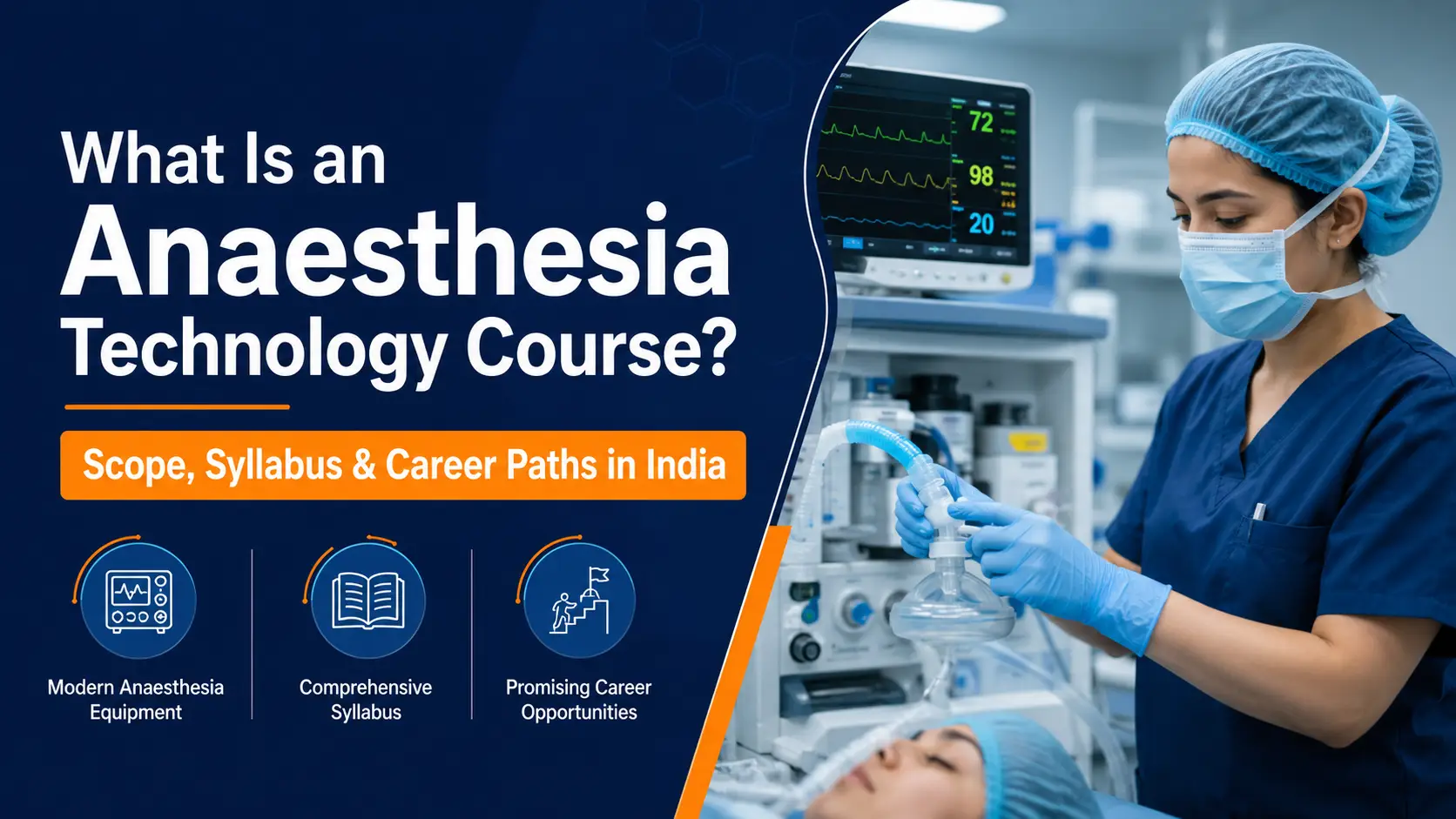
Healthcare is one of the fastest-growing sectors in India. New hospitals, specialised clinics, trauma centres, and surgical units are opening across cities and towns. While doctors and nurses often receive the most attention, there are many skilled healthcare professionals who play an important role behind the scenes.
One such professional is an Anaesthesia Technologist.
Many students completing Class 12 with PCB are searching for healthcare careers that offer practical learning, strong job opportunities, and meaningful work. An anaesthesia technology course is becoming a popular choice because it combines medical knowledge with hands-on clinical training.
An Anaesthesia Technologist works closely with anaesthesiologists and surgical teams. Their responsibilities include preparing anaesthesia equipment, assisting during surgeries, monitoring devices, and helping ensure patient safety before, during, and after operations.
If you are curious about the anaesthesia technology course, its syllabus, career prospects, salary potential, and future opportunities, this guide will help you understand everything in simple terms.
What Is an Anaesthesia Technology Course?
An anaesthesia technology course is a specialised allied healthcare programme that trains students to support anaesthesiologists and operation theatre teams during surgical procedures.
The course focuses on:
- Anaesthesia equipment handling
- Patient monitoring systems
- Emergency care procedures
- Surgical room assistance
- Infection control practices
- Operation theatre management
- Critical care support
Students gain both classroom knowledge and practical hospital exposure. By the end of the programme, they are equipped to work in operation theatres, intensive care units, emergency departments, and surgical centres.
One of the most sought-after programmes in this field is the Baccalaureate in Anaesthesia & Operation Theatre Technology (B.AOTT).
Who Can Apply for an Anaesthesia Technology Course?
Students who have completed their Higher Secondary Education with science subjects are generally eligible.
Basic Eligibility
| Eligibility Requirement | Details |
|---|---|
| Educational Qualification | 10+2 from a recognised board |
| Subjects Required | Physics, Chemistry, Biology |
| Minimum Marks | As per university norms |
| Age Criteria | As per institutional guidelines |
Students interested in healthcare, patient care, and surgical sciences often find this field both exciting and rewarding.
How Does the Admission Process Work?
The admission process may vary slightly between institutions. Generally, students need to:
- Submit an application form.
- Provide academic documents.
- Meet eligibility requirements.
- Attend counselling or admission rounds if required.
- Complete admission formalities.
Prospective students should always check the latest admission guidelines on the university website.
What Do You Study in an Anaesthesia Technology Course?
Many students ask, “What will I actually learn during the programme?” The curriculum combines theoretical learning with practical hospital exposure.
Students build a strong foundation in medical sciences. They learn specialised concepts related to anaesthesia and operation theatre technology. The anaesthesia technology course at MNR University focuses on advanced clinical learning.
Key Subjects
- Human Anatomy
- Human Physiology
- Biochemistry
- Basic Pathology
- Medical Terminology
- Healthcare Ethics
- Pharmacology
- Anaesthesia Techniques
- Surgical Procedures
- Operation Theatre Technology
- Infection Control
- Medical Equipment Handling
- Critical Care Technology
- Advanced Anaesthesia Equipment
- Emergency Medicine
- Trauma Care
- Intensive Care Practices
- Patient Monitoring Systems
Internship and Clinical Training
Practical training forms an important part of the anaesthesia technology course at MNR University. Students gain exposure to:
- Operation theatres
- Intensive care units
- Recovery rooms
- Emergency departments
- Multispecialty hospitals
This practical experience helps students understand real hospital environments.
Why Is the Scope of Anaesthesia Technology Growing in India?
Healthcare needs are increasing every year. Factors contributing to rising demand include:
- Growth of multispecialty hospitals
- Increasing surgical procedures
- Expansion of healthcare infrastructure
- Rise in critical care facilities
- Growing elderly population
- Technological advancements in healthcare
As hospitals continue to expand, the need for trained anaesthesia and operation theatre professionals is expected to rise steadily.
Healthcare Growth Statistics in India
| Healthcare Indicator | Recent Data |
|---|---|
| Healthcare Industry Size | Expected to exceed USD 638 billion by 2025 |
| Hospital Industry Growth | One of India’s fastest-growing sectors |
| Medical Tourism Market | Rapid expansion across major cities |
| Demand for Allied Health Professionals | Increasing across public and private healthcare institutions |
These trends indicate strong opportunities for graduates pursuing an anaesthesia technology course.
What Career Paths Can You Explore After an Anaesthesia Technology Course?
Graduates have access to a wide range of healthcare careers.
1. Anaesthesia Technologist
Works directly with anaesthesiologists during surgeries.
Responsibilities include:
- Equipment preparation
- Drug preparation assistance
- Monitoring support
- Surgical room readiness
2. Operation Theatre Technologist
Supports surgical teams by managing operation theatre equipment and procedures.
3. Critical Care Technician
Works in ICUs and critical care units assisting healthcare professionals.
4. Emergency Care Technician
Supports emergency medical teams in trauma and urgent care situations.
5. Surgical Assistant
Provides technical assistance during various surgical procedures.
6. Clinical Application Specialist
Works with healthcare technology companies and medical equipment manufacturers.
7. Hospital Administration Support Roles
Experienced professionals may move into healthcare management and supervisory positions.
What Salary Can You Expect After an Anaesthesia Technology Course?
Salary depends on factors such as location, skills, experience, employer type, and specialisation.
Average Salary Progression
| Experience Level | Approximate Annual Salary |
|---|---|
| Fresher | ₹2.5 lakh to ₹5 lakh |
| 3 to 5 Years | ₹5 lakh to ₹8 lakh |
| Senior Professional | ₹8 lakh+ |
| Specialist Roles | Higher based on expertise |
Professionals working in reputed hospitals and specialised healthcare centres often receive attractive career growth opportunities.
B.AOTT vs Diploma in Anaesthesia: Which Should You Choose?
Many students are confused between a diploma and a bachelor’s degree.
| Parameter | B.AOTT | Diploma |
|---|---|---|
| Duration | Longer and comprehensive | Shorter |
| Curriculum Depth | Extensive | Basic |
| Clinical Exposure | High | Moderate |
| Career Opportunities | Wider | Limited |
| Higher Education Options | Available | Limited |
| Industry Recognition | Strong | Moderate |
Students aiming for long-term career growth generally prefer a bachelor’s programme.
What Skills Does an Anaesthesia Technologist Need?
Technical knowledge alone is not enough. Successful professionals often possess:
Attention to Detail: Small mistakes can affect patient safety.
Communication Skills: Clear communication with doctors and nurses is important.
Technical Knowledge: Understanding medical devices and monitoring systems is essential.
Teamwork: Operation theatres require coordinated teamwork.
Problem Solving Ability: Quick decision-making can be valuable during emergencies.
Professional Ethics: Patient confidentiality and ethical practices remain important in healthcare.
Why Is MNR University’s B.AOTT Programme a Strong Choice?
Students often look for institutions that combine academic learning with practical exposure. MNR University offers several advantages that help students prepare for healthcare careers.
Telangana’s First DASCA USA Accredited University
This recognition reflects the university’s commitment to academic quality and global standards.
Over 50 Years of Educational Legacy
The institution has built a strong reputation through decades of educational excellence.
Modern Laboratory Facilities
Students gain hands-on experience through well-equipped laboratories that reflect real clinical environments.
Hands-On Surgical Room Training
The programme provides exposure to actual operation theatre settings.
Anaesthesia Equipment and Drug Handling Training
Students learn how to work safely with specialised medical equipment and medications.
Emergency and Critical Care Exposure
Training includes situations commonly encountered in hospitals and critical care units.
Internship Opportunities
Clinical training in multispecialty hospitals helps students build confidence and professional skills.
Experienced Faculty and Clinicians
Students learn from healthcare professionals with practical industry experience.
Placement and Career Support
Career readiness initiatives help students prepare for employment opportunities after graduation.
What Does the Future Hold for Anaesthesia Technology Professionals?
Healthcare technology continues to evolve rapidly. Advancements in:
- Robotic surgery
- Advanced patient monitoring
- Smart operation theatres
- Critical care systems
- Emergency medicine
are creating additional opportunities for trained professionals. Students entering an anaesthesia technology course between 2026 and 2030 are likely to benefit from increasing demand and expanding healthcare infrastructure.
Conclusion
The healthcare sector offers many career options, but few combine technical expertise, patient care, and surgical support as effectively as an anaesthesia technology course.
This field provides students with practical clinical exposure, specialised medical knowledge, and strong employment opportunities. As hospitals continue to expand and surgical procedures become increasingly sophisticated, the demand for trained anaesthesia and operation theatre professionals is expected to remain strong.
For students interested in healthcare careers after Class 12, the anaesthesia technology course offers a promising pathway. Programmes such as the B.AOTT at MNR University provide the academic foundation, practical training, and industry exposure needed to build a successful future in healthcare.
Frequently Asked Questions
An Anaesthesia Technology course trains students to assist anaesthesiologists during surgeries and manage anaesthesia-related equipment and patient monitoring systems.
Most B.AOTT programmes are completed over four years, including clinical training and internships.
Students who have completed 10+2 with Physics, Chemistry, and Biology are generally eligible.
Yes. Growing healthcare infrastructure and increasing surgical procedures have created strong demand for trained professionals.
Students study anatomy, physiology, pharmacology, anaesthesia techniques, operation theatre technology, emergency care, and critical care.
Graduates can work in hospitals, surgical centres, trauma care facilities, ICUs, and emergency departments.
You can work as an Anaesthesia Technologist, OT Technologist, Critical Care Technician, Emergency Care Technician, or Surgical Assistant.
Freshers may earn ₹2.5 lakh to ₹5 lakh annually, with higher salaries possible as experience grows.
Yes. Graduates can apply for suitable positions in government healthcare institutions and medical colleges.
A bachelor's degree generally offers broader learning, stronger career prospects, and better opportunities for higher studies.
Technical skills, teamwork, communication abilities, attention to detail, and professional ethics are important.
Yes. Graduates can pursue postgraduate studies, specialised certifications, and healthcare management programmes.
Many countries require trained allied healthcare professionals, creating potential international career opportunities.
An anaesthesiologist is a doctor who administers anaesthesia, while an Anaesthesia Technologist assists with equipment, monitoring, and procedural support.
The programme provides specialised healthcare training, practical experience, and strong career opportunities in hospitals and healthcare institutions.
MNR University offers hands-on training, modern laboratories, experienced faculty, clinical exposure, internships, and career support.
Both are valuable programmes. B.AOTT offers specialised training in anaesthesia and operation theatre technology with strong clinical exposure.
Salary varies based on skills and experience, but graduates can expect competitive entry-level opportunities with growth potential.
Related Blogs

Top BSc Optometry Colleges in Telangana 2026: Rankings, Fees and Admission Guide
Are you looking for the best BSc Optometry colleges in Telangana? Telangana has a growing…
Advanced Ocular Therapeutics: Optometry in Laser and Virtual Reality
Human sight processes complex light patterns constantly, demanding absolute physical precision from our ocular systems….
Physiotherapy Course in Hyderabad: Your Complete Guide to a Rewarding Healthcare Career
Stepping into the field of physiotherapy is a choice many young students in India are…
Top Career Opportunities After Physiotherapy in India & Abroad
The landscape of healthcare is shifting toward movement-based recovery, making the choice to study at…
Top B.Optometry Colleges in Telangana 2026: Rankings, Fees and Admission Guide
Telangana has a growing number of colleges offering a Bachelor in Optometry. One of the…
BSc Radiology Admission Process 2026: A Step-by-Step Guide for Students and Parents
Every March, a familiar scene plays out in Telangana homes. The Intermediate exams finish, the…