
Emerging Science Careers in India: Degrees That Employers Will Value in the Next Decade
Home / MNR University / Emerging Science Careers in India: Degrees That Employers Will Value in the Next Decade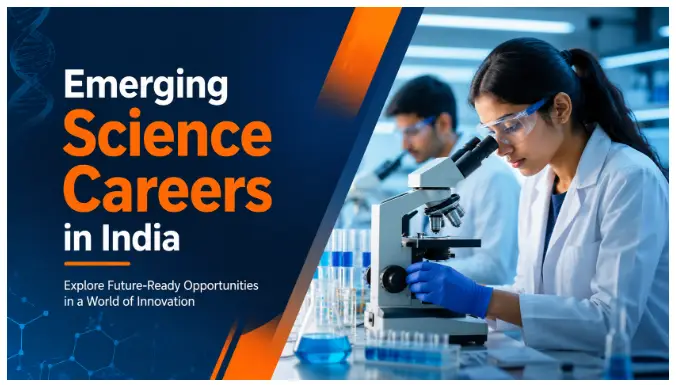
Science has always drawn curious minds. Yet the kind of science jobs that pay well and stay in demand keeps shifting. A degree that felt safe ten years ago may not carry the same weight today. This is why so many families searching for the best colleges for science now ask a sharper question. They no longer ask only which course is popular. They ask which degree an employer will still value ten years from now.
The good news is that India is building new science jobs at a fast pace. The country’s bioeconomy has grown from about 10 billion US dollars in 2014 to more than 195 billion US dollars in 2025 (Source: BIRAC India Bioeconomy Report 2026). Hospitals are short of trained staff. Data-driven roles are spreading into every sector. For a science student, this is a rare moment. The right degree, taken at one of the best colleges for science, can open doors that barely existed a decade ago.
This guide looks at the science degrees that employers are likely to reward over the next decade. It covers healthcare careers, biotechnology careers, laboratory sciences and physiotherapy careers. It also explains, in plain terms, how students can pick a course and a campus with confidence.
Why are science careers in India changing so fast?
The situation has changed considerably over the last few years. A few forces are pushing this change along together.
First, health has become a national priority. India has roughly one doctor for every 1,456 people, which sits below the level the World Health Organization suggests. To meet this need, hospitals require far more than doctors. They need physiotherapists, laboratory technologists, radiographers and other trained hands.
Second, biotechnology has turned into a serious growth engine. The sector now adds close to 5 per cent of the country’s total income, and it keeps expanding each year.
Third, data and computing have entered the science world. Hospitals use software to read scans. Laboratories use tools to sort test results. Biotech firms use models to design new medicines. A science graduate who understands both biology and basic computing is now hard to find and easy to hire.
A closer look at the industry shows that this demand is not limited to the big metros. Cities such as Hyderabad, Pune and Bengaluru lead the way, but smaller cities are catching up quickly. This spread is good news for students across the country.
| Area | Key Figure | What It Means for Students |
|---|---|---|
| Bioeconomy Size (2025) | About 195 billion USD, up from 10 billion USD in 2014 | Creates significant opportunities in biotechnology, healthcare, and life sciences, leading to more career options. |
| Biotech Start-ups (2025) | 11,855 registered across the country | A growing number of companies means more internships, graduate roles, and entrepreneurship opportunities. |
| Doctor-to-Population Ratio | Around 1 : 1,456 | Continued demand for allied health professionals, medical technologists, and healthcare support staff. |
| Data & AI Professionals Needed by 2026 | Over 1 million | Students with expertise in science, data analytics, and artificial intelligence can access high-paying careers. |
Which science degrees will employers value most in the next decade?
Not every science degree carries equal weight in the job market. Employers tend to reward degrees that mix strong basics with a clear job at the end.
It is worth noting that the most promising degrees share three simple features. They solve a real need, such as health or food or clean energy. They use modern tools and machines. And they lead to work that a computer cannot fully replace.
|
What makes healthcare careers a safe bet for the future?
Healthcare careers stand out for one simple reason. People will always fall ill, and the country does not have enough trained staff to care for them.
Industry and policy estimates point to a shortage of more than six million allied and healthcare professionals across India. These are not doctors. They are the trained people who run tests, guide recovery and support treatment day after day.
Physiotherapy careers are a clear example. An ageing population, more road accidents and a rise in desk-job injuries have all raised the need for physiotherapists. A physiotherapist helps patients move again, recover from injury and live without pain. The work is steady, respected and needed in every city and town.
From an employer’s point of view, allied health staff are valuable because they can be trained faster than doctors, yet they keep hospitals and clinics running smoothly.
|
How is biotechnology opening new doors for science graduates?
Biotechnology careers have moved from the margins to the centre of Indian science. The field uses living cells to make medicines, vaccines, better crops and cleaner fuels.
The figures show why. India’s bioeconomy is on track to reach 300 billion US dollars by 2030 (Source: BIRAC). The government’s BioE3 policy, approved in 2024, is expected to create thousands of skilled jobs and support new start-ups. More than 11,855 biotech start-ups were active in 2025.
There is a strong regional angle here as well. This is where things become interesting for students near Hyderabad. Telangana is one of India’s top biotech states, and its life-science sector has crossed the 20 billion US dollar mark. In practical terms, this means employers sit close to home.
| Segment | Example Roles | Typical Employers |
|---|---|---|
| Bio-pharma | Research Associate, Quality Analyst | Vaccine and medicine makers |
| Bio-industrial | Bioprocess Associate, Fermentation Technician | Enzyme and biofuel firms |
| Bio-agriculture | Plant Biotech Associate, Seed Analyst | Agri-biotech companies |
| Bio-services | Clinical Research Associate, Laboratory Analyst | Research and testing firms |
Why do laboratory sciences matter more than ever?
Laboratory sciences sit quietly behind almost every medical decision. When a doctor asks for a blood test or a scan, a trained laboratory professional does the work that makes the diagnosis possible.
Not everyone is aware that the demand for laboratory staff is climbing fast. More people now test early for illness. Health insurance covers more tests than before. New machines need skilled hands to run them.
A degree such as B.Sc Medical Laboratory Technology prepares students for exactly this work. Graduates can join diagnostic chains, hospital labs, research centres and biotech firms. In many ways, laboratory sciences offer one of the steadiest paths in the whole science field.
What career options after science can students really consider?
For many students, the biggest worry is choice. A science background opens more doors than most people realise. The trick is to match interest with demand.
Career options after science now stretch across health, research, technology and industry. A student who enjoys the human body may pick physiotherapy or laboratory science. A student drawn to living systems may pick biotechnology or microbiology. A student who likes numbers and computers may pick data science. There is little doubt that a well-chosen science degree keeps many career options after science open at once.
| If a Student Enjoys | Suitable Course | Sample Careers | Entry Salary (Per Year) |
|---|---|---|---|
| Helping patients recover | Bachelor of Physiotherapy | Physiotherapist, Rehabilitation Therapist | About ₹2.5–4 LPA |
| Laboratory work and testing | B.Sc Medical Laboratory Technology | Laboratory Technologist, Laboratory Analyst | About ₹2.5–4 LPA |
| Living cells and medicines | B.Sc / B.Tech Biotechnology | Research Associate, Quality Analyst | About ₹3–5 LPA |
| Data and computing | B.Sc / B.Tech Data Science | Data Analyst, Junior Data Scientist | About ₹5–8 LPA |
| Food, microbes and safety | B.Sc Microbiology | Microbiologist, Food Analyst | About ₹2.5–4 LPA |
How can students choose the best colleges for science?
Choosing a course is only half the job. The campus matters just as much. The best colleges for science do more than teach theory. They give students real practice, good labs and a clear path to a job.
Ask any experienced professional in the field, and they will tell you what to check before joining. Families comparing the best colleges for science should look beyond glossy brochures. Students should study the labs, the teaching staff, the record of placements and the links a college holds with hospitals or industry.
| What to Check | Why It Matters | Good Sign to Look For |
|---|---|---|
| Laboratory quality | Science is learnt by doing | Modern, well-stocked laboratories |
| Accreditation | Shows quality is checked | UGC, NAAC or global bodies |
| Placement record | Points to real job outcomes | Regular recruiters on campus |
| Industry and hospital links | Helps with training and jobs | Tie-ups and internships |
| Scholarships | Eases the cost of study | Merit and need-based support |
Where does MNR University, Hyderabad fit in?
For students in Telangana who want a science degree with a job at the end, MNR University, Hyderabad is worth a close look. It sits among the best colleges for science in the region for a few clear reasons.
The university carries a legacy of more than fifty years in education, having begun in 1974. It is Telangana’s first university to earn accreditation from the Data Science Council of America (DASCA), a United States body, which links its teaching in data-led subjects to global standards.
MNR University also holds a Gold rating for a sustainable campus. It offers science and health programmes such as biotechnology, medical laboratory technology and physiotherapy, along with teaching hospitals where students can train. The campus has well-equipped technical laboratories, and the university runs scholarships, internships and placement support for its students.
From a student’s perspective, this mix of long legacy, global accreditation, health-focused programmes and placement support makes MNR University one of the practical choices among the best colleges for science in and around Hyderabad.
What should science students do next?
The next decade belongs to science graduates who plan well. The jobs are there, spread across healthcare careers, biotechnology careers, laboratory sciences and physiotherapy careers. What matters is picking a degree with real demand and studying it at one of the best colleges for science. A student who chooses wisely today gives themselves a strong chance of a stable and rewarding career tomorrow.
Frequently Asked Questions
Degrees in data science, biotechnology, physiotherapy and medical laboratory technology hold strong job scope in India. Healthcare and biotechnology are both growing fast, so trained graduates in these fields find steady demand.
Data science roles tend to pay the most for freshers, with entry salaries of about 5 to 8 lakh per year. Biotechnology, physiotherapy and laboratory roles pay less at the start but grow well with experience and skill.
Yes. India's bioeconomy crossed 195 billion US dollars in 2025 and aims for 300 billion by 2030. The BioE3 policy and thousands of biotech start-ups are creating fresh roles for science graduates every year.
Career options after science include work in hospitals, diagnostic labs, biotech firms and research centres. Students can also add computing skills and move into data-led roles that pay well across many sectors.
Yes. India faces a large shortage of allied health staff, and physiotherapists are needed in hospitals, clinics, rehabilitation units and sports centres. An ageing population and lifestyle injuries keep this demand high.
Students should check the laboratory quality, accreditation, placement record and industry or hospital links of each college. Strong labs, recognised accreditation and regular campus recruiters are good signs to look for.
Yes. MNR University, Hyderabad offers biotechnology, medical laboratory technology and physiotherapy courses, among others. It is Telangana's first DASCA-accredited university and holds a Gold rating for a sustainable campus.
Hyderabad, Bengaluru and Pune are strong for science, biotech and data jobs. Hyderabad is a leading biotech hub in India, which helps students in Telangana find work close to home.
Related Blogs

Top Career Opportunities After Physiotherapy in India & Abroad
The landscape of healthcare is shifting toward movement-based recovery, making the choice to study at…
BSc Optometry Fees in India 2026: Government vs Private Colleges and What Affects the Cost
A career in eye care starts with one practical question: how much does the course…
From Surgery Lights to Wearable Pain Trackers: B.Sc. Anesthesia in Hyderabad
Ever walked into a hospital operating room and felt that hum of machines keeping everything…
Best Optometry Colleges in India in 2026: A Complete Comparison Guide
Every year, thousands of students finish Class 12 with Biology and start looking past MBBS….

How Can Students Choose the Right CSE College with Placements in South India?
Picking the right engineering college feels like a big decision for most families. Students want…

After Class 12 Science: Which Degree Offers the Best Career Opportunities in 2026?
Stepping into the final year of Class 12 Science brings a mix of pride and…