
Radiology vs Physiotherapy vs Nursing: Which Healthcare Career is Better?
Home / School of Allied Sciences / Radiology vs Physiotherapy vs Nursing: Which Healthcare Career is Better?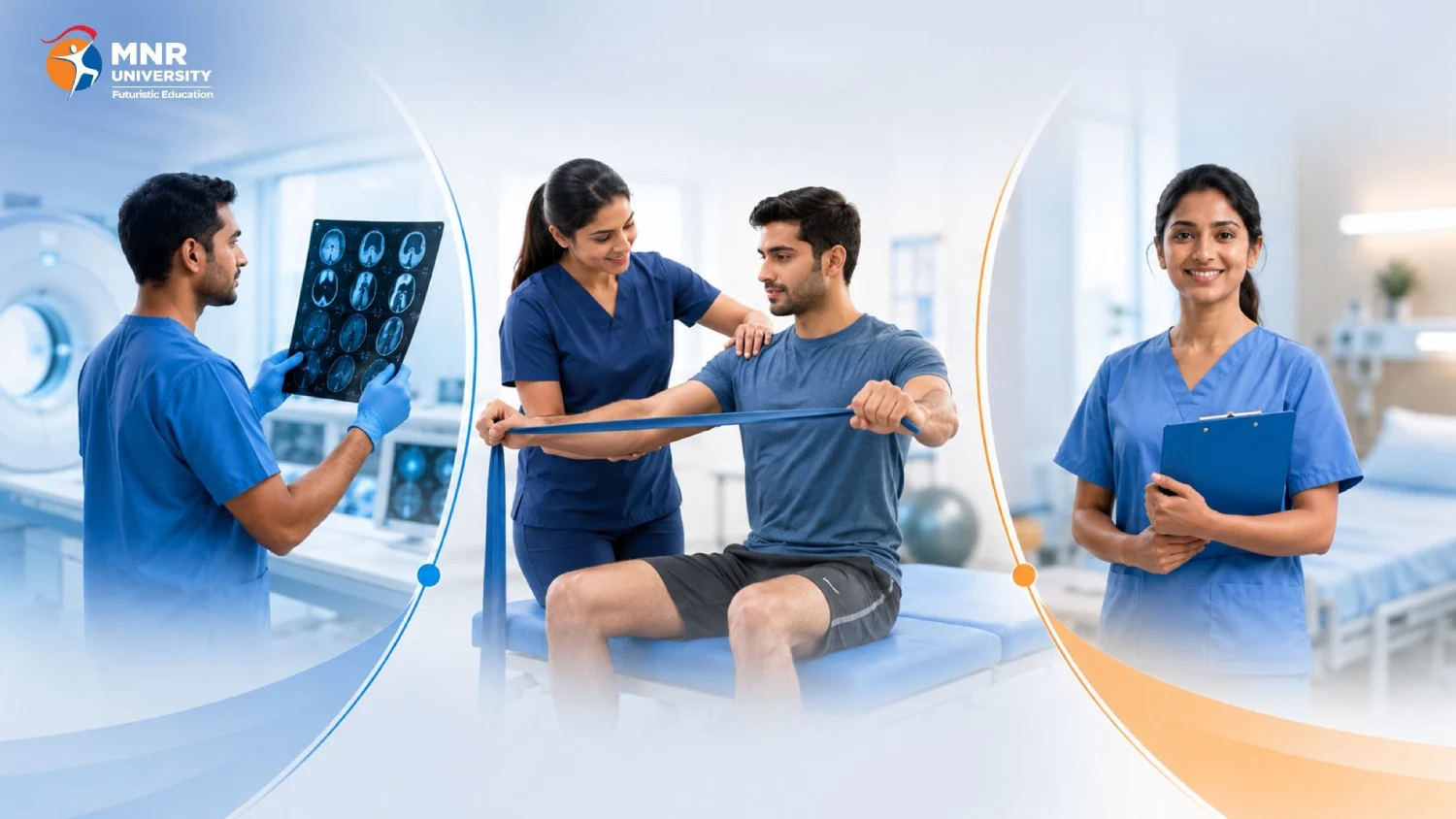
Healthcare in India is expanding at a remarkable pace, and the scope of radiology, physiotherapy, and nursing has widened right along with it. At MNR University, recognised among the best colleges for radiology in India, students often weigh these three paths before sending in an application. Each profession shapes patient care in its own way, demands a different temperament, and rewards a different mindset. This blog walks you through the daily work, salary band, study duration, and growth potential of each, so your decision rests on solid information rather than family hearsay or social-media chatter that often misleads first-generation aspirants.
What Does a Radiology Career Actually Look Like in India?
Radiology Technologists sit at the heart of modern diagnosis. They handle X-ray units, computed tomography scans, magnetic resonance imaging machines, ultrasound systems, and advanced imaging technology that catches cancer, fractures, cardiac trouble, and neurological conditions in their earliest stages. Hospitals across the country have been investing heavily in diagnostic infrastructure, which has stretched the scope of radiology well beyond metro cities into smaller districts. Freshers begin at a comfortable salary band, and senior specialists earn handsomely, particularly those who pursue interventional radiology, neuro-imaging, or paediatric imaging after their primary degree.
How Is Physiotherapy Different from Radiology and Nursing?
Physiotherapy is hands-on, movement-driven, and deeply human. A physiotherapist designs the full recovery plan for patients dealing with back pain, sports injuries, post-surgical stiffness, paralysis recovery, or age-related joint trouble. The work is physical, conversational, and rewarding in a visible manner, because patients arrive struggling and leave improved. Common workplaces include sports clinics, rehabilitation centres, home-care services, elderly day-care facilities, and independent practice. With an ageing population and a growing fitness culture in Indian cities, demand for qualified physiotherapists keeps rising every year.
Why Is Nursing Still Considered the Backbone of Healthcare?
Nursing remains the most direct form of patient care. Nurses monitor recovery, administer medication, assist surgical teams, support critical-care units, and coordinate between doctors and families during difficult moments. The profession offers strong international mobility, with countries such as the United Kingdom, Germany, Australia, and Canada actively recruiting Indian nurses every year. Government hospitals, private chains, and home-care providers all rely on nursing staff for daily operations, which keeps the job market consistently strong across the country.
How Do the Three Careers Compare Side by Side?
|
How Does MNR University Prepare Students for These Healthcare Roles?
Why MNR University Stands Among the Best Colleges for Radiology in India
The School of Allied and Healthcare Sciences builds its curriculum around the exact job descriptions hospitals advertise today. Faculty members teach with the end role in mind, so learners develop academic depth and practical fluency well before graduation. The expanding scope of radiology is reflected through dedicated modules on interventional imaging, oncology screening, and computer-assisted diagnostics. The structure makes sure students learn the theory and develop the practical hand within the same degree timeline, rather than waiting for post-graduation training.
Students develop real skills in every semester through:
- Live hospital rotations from the second year, with hands-on exposure to MRI, CT, and ultrasound suites.
- Patient-handling and case-study workshops led by senior clinicians
- Soft-skill modules covering report writing, ethical practice, and bedside communication
- Capstone projects evaluated by industry mentors before final placement
What Makes MNR University a Strong Launchpad for Global Exposure?
Academic linkages with international universities give MNR students a wider lens on healthcare practice. The institution collaborates with five reputed names in the United States, opening doors to research, joint certification, and semester exchange:
- Cumberland University for healthcare research projects
- Wayland Baptist University for nursing-focused exchange
- Faulkner University for credit transfer programmes
- Campbellsville University for allied healthcare studies
- St. Francis College for global clinical exposure
Final Word
The right healthcare career depends on the kind of work that energises you on a regular day. Radiology suits learners who enjoy technology and visual pattern reading. Physiotherapy fits those drawn to movement, touch, and recovery. Nursing rewards a steady, empathetic temperament that finds meaning in everyday care. If diagnostic imaging is where your interest leans, MNR University remains one of the best colleges for radiology in India, with a curriculum, faculty, and global tie-ups that prepare you for the role from the very first semester. Visit the campus, sit through a class, and let the environment help you decide.
Frequently Asked Questions
The programme runs for three years of academic study followed by a one-year internship that places students in working hospital environments.
Yes, the campus provides separate hostels for male and female students, with in-house medical support, hygienic dining, and dedicated study spaces.
Selected students gain global exposure through partnerships with Cumberland University, Wayland Baptist University, Faulkner University, Campbellsville University, and St. Francis College.
Candidates must have completed Class 12 with Physics, Chemistry, and Biology from a recognised board, along with the required entrance score.
Yes, the placement cell works with leading hospital chains, diagnostic centres, and rehabilitation networks across India to support every graduating batch.
Related Blogs
Wearable Sensors for Circulation: The Future Role of the Perfusionist
A Bachelor of Science (B.Sc.) in Perfusion Technology introduces students to a rapidly advancing field…
Anesthesiology & OT Technology Course After 12th: A High-Demand Healthcare Career in 2026!
Inside every operating theatre, one team holds the line between a smooth surgery and a…
B. Optometry (Bachelor in Optometry) Course Details: Duration, Syllabus and Career Scope
Bachelor in Optometry is a four-year undergraduate healthcare degree that trains students to examine eyes,…

Emerging Science Careers in India: Degrees That Employers Will Value in the Next Decade
Science has always drawn curious minds. Yet the kind of science jobs that pay well…
Best Optometry Colleges in India in 2026: A Complete Comparison Guide
Every year, thousands of students finish Class 12 with Biology and start looking past MBBS….
Best Healthcare Courses in Hyderabad: 20 Career-Ready Programmes at MNR University
Hyderabad has stepped into a fresh chapter of medical education, and students from every corner…