
Radiology Career: Why AI Will Never Replace Human Experts
Home / School of Allied Sciences / Radiology Career: Why AI Will Never Replace Human Experts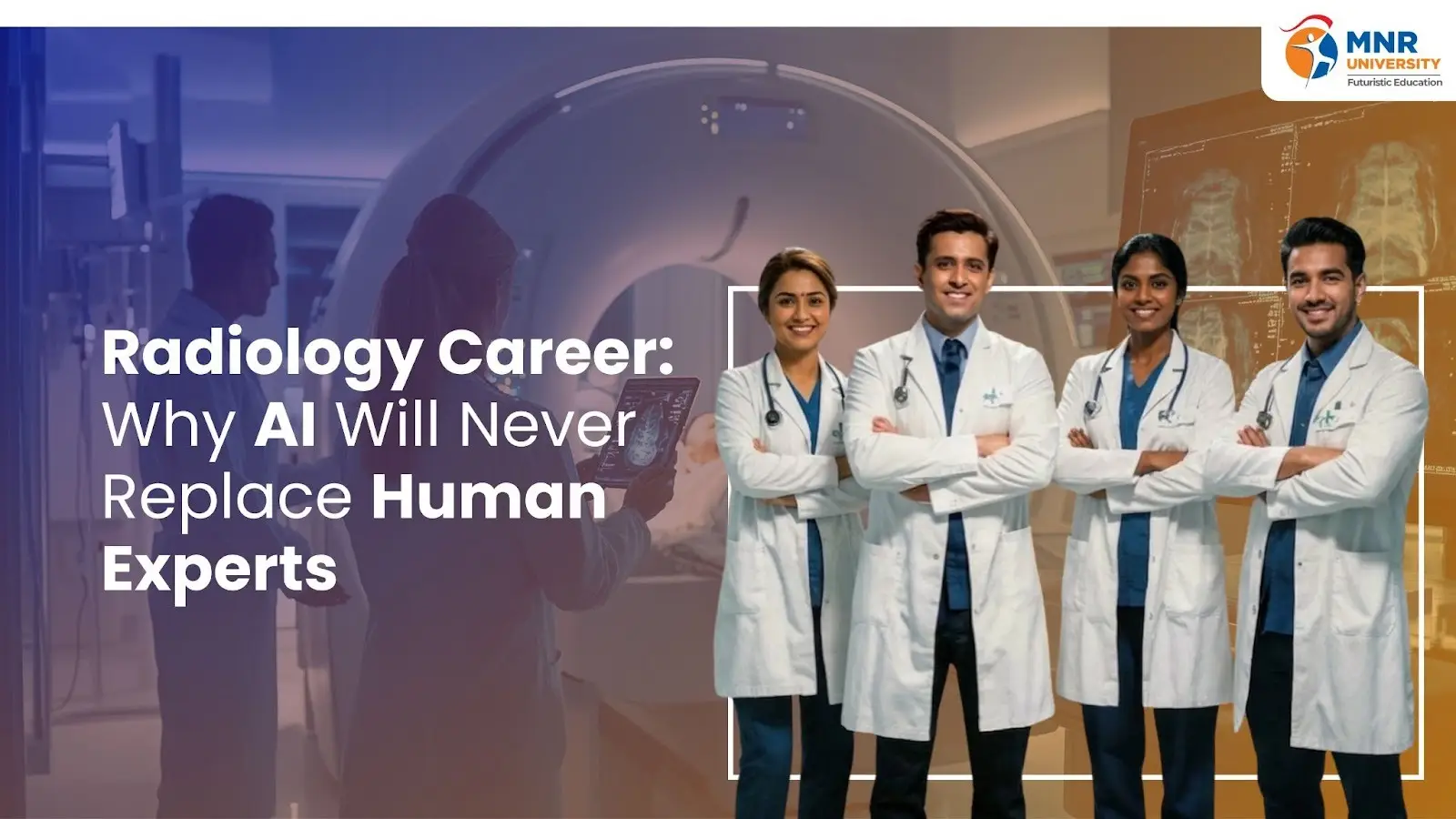
Artificial intelligence continues to reshape modern healthcare systems at an unprecedented pace. Students entering the medical diagnostic field recognise a massive shift in how technology supports daily clinical operations. Among the best colleges for Radiology in India, progressive institutions teach students how to harness intelligent software as a powerful collaborative tool rather than viewing it as competition. Advanced algorithms process massive datasets in seconds, while trained medical professionals provide the final critical human evaluation. The future belongs to those who learn to operate alongside these advanced technological systems with complete clinical confidence and precision.
How Does AI Assist Rather Than Replace Radiologists?
Intelligent software systems excel at analysing complex medical images and identifying subtle structural patterns rapidly. These digital tools quickly flag critical scans that require immediate human attention, significantly reducing diagnostic wait times for urgent medical cases. Many B.Sc Radiology colleges in India have adapted their teaching methodologies to reflect this ongoing technological evolution in hospital settings. The diagnostic process remains firmly in human hands, as algorithms cannot physically examine patients, empathise with worried families, or formulate comprehensive treatment plans. A doctor reviews the automated output to ensure medical accuracy before finalising any clinical report.
| Task Category | Artificial Intelligence Role | Human Radiologist Role |
| Image Processing | Enhances image resolution automatically | Interprets the final high-quality scans |
| Data Analysis | Measures tumour volumes and dimensions | Contextualises data within patient history |
| Workflow Routing | Flags critical abnormalities instantly | Prioritises urgent patient care protocols |
| Clinical Output | Generates initial draft summaries | Authorises the final medical diagnosis |
What Makes the Academic Curriculum at MNR University Relevant for Future Jobs?
The School of Allied and Healthcare Sciences at MNR University builds programs around job-role-specific skill requirements directly requested by leading hospitals. The academic structure allows learners to both learn theoretical concepts and develop practical skills simultaneously within the span of the degree. An industry-aligned curriculum ensures graduates understand global best practices in teaching and learning from their very first semester. Structured soft-skills development runs parallel to rigorous clinical training to create well-rounded medical professionals.
- Students engage directly with advanced innovation laboratories to practice modern scanning techniques safely.
- Dedicated industry mentors guide learners through complex real-world medical imaging scenarios.
- Regular industry visits expose students to operational dynamics within large-scale diagnostic centres.
- Live project opportunities at the in-campus 720-bedded hospital allow students to apply classroom knowledge to actual healthcare challenges.
Why Do Global Collaborations Matter in Healthcare Education?
Medical technology advances universally across different continents simultaneously. Institutions offering 50+ years of trust and excellence understand the necessity of maintaining a globally connected academic ecosystem. Cross-border partnerships elevate the standard of learning by introducing diverse perspectives on patient care and advanced equipment handling. Top-tier educational facilities actively maintain networks with international universities to broaden the scope of available student opportunities.
| Partner University | Key Collaborative Benefit | Impact on Student Growth |
| Cumberland University | Student exchange programmes | Broadens cultural and clinical perspectives |
| Campbellsville University | Global internship opportunities | Provides hands-on international medical exposure |
| St. Francis College | International certification programmes | Upgrades global employability and resume value |
| Wayland Baptist University | Joint research initiatives | Enhances evidence-based diagnostic knowledge |
| Faulkner University | Academic knowledge transfer | Strengthens foundational healthcare methodologies |
How Do Modern Educational Environments Shape Student Careers?
A research-driven academic ecosystem fundamentally changes how a student approaches their lifelong career trajectory. MNR University features 2,000+ expert faculty members who bring decades of specialised clinical expertise directly into the lecture halls. The institution maintains 25+ industry partnerships that facilitate seamless transitions from campus life to corporate healthcare environments. When exploring B.Sc Radiology colleges in India, families look closely at how a college integrates these external partnerships into daily learning. The Times All India Engineering Institutes Ranking 2025 placed our technical divisions at Rank 2 in Telangana and Rank 5 in All India, reflecting an overarching institutional commitment to academic superiority across all disciplines.
- Guest lectures by industry experts keep students informed about upcoming technological shifts.
- Startup incubation and acceleration programmes assist graduates interested in opening independent diagnostic centres.
- Patent filing support encourages students and faculty to innovate new medical device attachments.
- Continuous clinical rotations build the necessary confidence to handle high-volume hospital environments.
Proper preparation forms the bedrock of a lasting professional career in medical imaging. Evaluate the course structures and specialised training modules designed to meet modern healthcare demands. Take the necessary steps to review the complete admission criteria for the upcoming academic session.
For More Details
Call: +91 85000 54445
Email: admissions@mnruniversity.edu.in
Frequently Asked Questions
Students master advanced medical imaging techniques while developing job-role-specific competencies. The curriculum heavily integrates hands-on clinical practice with modern diagnostic technology training.
The university leverages a legacy of over fifty years of proven educational excellence. Extensive industry partnerships and dedicated faculty members ensure high graduate employability across top healthcare sectors nationwide.
The curriculum includes active academic partnerships with Cumberland University, Wayland Baptist University, and several others. These global connections provide dedicated avenues for student exchange programmes and international certification courses.
Related Blogs
How B.Sc. Respiratory Therapy Course Prepares Graduates to Revolutionise Urban Air Quality Management
In growing megacities where every breath counts, a highly specialised wave of healthcare professionals is…
Best Healthcare Courses in Hyderabad: 20 Career-Ready Programmes at MNR University
Hyderabad has stepped into a fresh chapter of medical education, and students from every corner…
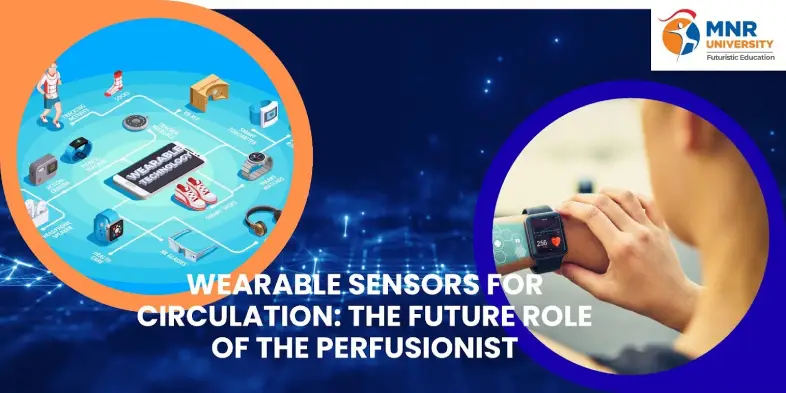
Wearable Sensors for Circulation: The Future Role of the Perfusionist
A Bachelor of Science (B.Sc.) in Perfusion Technology introduces students to a rapidly advancing field…
BSc Renal Dialysis Technology: Course Details, Scope, Salary & Career Opportunities in 2026
Stepping into the field of kidney care opens the door to a healthcare job that…
Physiotherapy Course in Hyderabad: Your Complete Guide to a Rewarding Healthcare Career
Stepping into the field of physiotherapy is a choice many young students in India are…
Anesthesiology & OT Technology Course After 12th: A High-Demand Healthcare Career in 2026!
Inside every operating theatre, one team holds the line between a smooth surgery and a…