
Radiology Career in India: Scope, Salary & Opportunities
Home / School of Allied Sciences / Radiology Career in India: Scope, Salary & Opportunities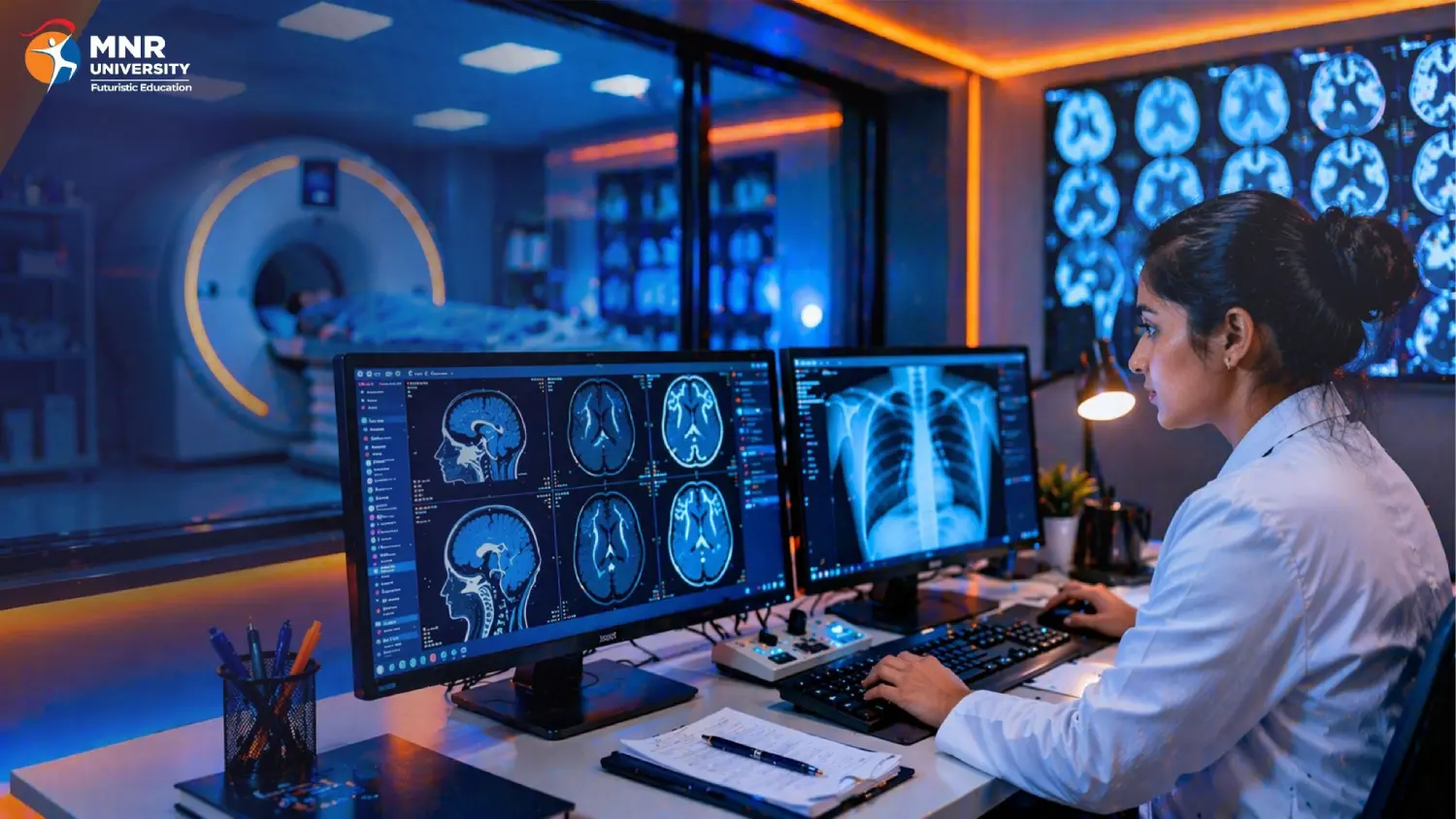
Hospitals today feel very different from what they were even ten years ago. A patient walks in, and within minutes, detailed images of the body appear on a screen. Doctors study those images before deciding the next step. This shift is not small. According to healthcare industry reports shared on platforms like Shiksha and iGauge, diagnostic imaging has grown rapidly in India, with demand rising across both cities and smaller towns. Radiology now plays a central role in medical decision-making.
This growing demand has quietly changed career preferences as well. Students and parents are now actively exploring the best colleges for radiology in India, looking for courses that connect directly with real hospital work. There is a sense that this field combines technology, patient care, and steady career growth in a balanced way. It is practical, structured, and closely linked with real-life impact.
What Is Radiology And Why Is It So Important?
Radiology is a branch of medical science that uses machines to create images of the inside of the human body. These images help doctors understand what is happening inside without surgery.
For example, when someone has a fracture, an X-ray shows the exact problem. When doctors need deeper details, they use scans like MRI or CT.
Radiology supports diagnosis, which means identifying a disease correctly.
In simple terms, radiology helps doctors “see inside” the body.
Students in the best colleges for radiology in India are trained to handle these machines, understand images, and assist doctors in accurate diagnosis.
What Are The Main Types Of Radiology?
Radiology is not limited to one type of work. It has different areas, each serving a specific purpose.
- Diagnostic Radiology
Focuses on detecting diseases using imaging tools like X-ray, MRI, and CT scans. - Interventional Radiology
Uses imaging guidance to perform small medical procedures, such as inserting tubes or treating blockages. - Radiation Therapy
Helps treat diseases like cancer using controlled radiation.
Each type requires focused training and practical exposure. Students often explore these areas during their course to understand where their interest lies.
What Is The Scope Of Radiology In India Today?
The demand for radiology has grown steadily in India. Hospitals, diagnostic centres, and even small clinics now depend on imaging services.
Several factors are driving this growth:
- Increase in lifestyle-related diseases
- Expansion of healthcare facilities in smaller cities
- Greater awareness about early diagnosis
- Technological advancements in medical imaging
Because of this, radiology job opportunities India are expanding across both private and government sectors.
Students graduating from the best colleges for radiology in India often find opportunities in:
- Hospitals and multi-speciality centres
- Diagnostic imaging labs
- Research and medical technology companies
- Tele-radiology services
This field offers stability because healthcare services remain essential at all times.
What Are The Emerging Trends In Radiology?
Radiology is changing with technology. The machines are becoming smarter, and the work is becoming more precise.
Some noticeable trends include:
- Artificial Intelligence in imaging
Software helps doctors read scans faster and detect patterns. - Digital radiology systems
Reports are now shared quickly through online platforms. - Portable imaging devices
Machines are now used even in remote locations. - Tele-radiology services
Doctors can analyse scans from different cities.
Students in the best colleges for radiology in India are now exposed to these modern tools during training, which helps them stay ready for current industry needs.
What Skills Are Required For A Successful Career In Radiology?
Radiology requires a mix of technical knowledge and careful observation. It is not only about operating machines. It also involves understanding details and working with medical teams.
Some important skills include:
- Attention to detail
Small differences in images can indicate important health conditions. - Technical understanding
Ability to operate and manage imaging equipment. - Communication skills
Coordinating with doctors and explaining procedures to patients. - Problem-solving ability
Handling unexpected situations during imaging. - Patience and focus
Ensuring accuracy in every step.
At MNR University, students are trained through practical sessions, lab exposure, and real clinical environments. This helps them move beyond theory and understand actual working conditions.
What Career Opportunities Are Available In Radiology?
Radiology offers a wide range of roles based on qualification and interest. The field is structured, and career growth happens with experience and skill development.
Some common roles include:
- Radiology Technician
- MRI Technician
- CT Scan Technologist
- Radiographer
- Radiology Assistant
- Imaging Specialist
With higher studies, students can also move into specialised roles or academic positions.
The rise in radiology job opportunities India ensures that trained professionals are needed across different healthcare setups.
Why Do Students Consider MNR University For Radiology Studies?
A strong academic base matters in medical education. At MNR University, the approach remains grounded and practical.
Students benefit from:
- Hands-on training with modern equipment
- Exposure to real clinical environments
- Structured curriculum aligned with industry needs
- Guidance from experienced faculty
- Focus on both technical skills and patient handling
This balance helps students understand not just how machines work, but also how healthcare systems function.
For those exploring the best colleges for radiology in India, such practical exposure often makes a meaningful difference.
Conclusion
Radiology has become an essential part of modern healthcare. It supports diagnosis, guides treatment, and improves patient outcomes. The field continues to grow as technology advances and healthcare access expands across India.
Students today are looking for careers that offer stability, practical learning, and real-world relevance. Radiology fits well into that space.
Choosing the best colleges for radiology in India becomes an important step in this journey. The right institution shapes both technical knowledge and professional confidence.
At MNR University, the focus remains on building that foundation steadily, so students are prepared for the evolving demands of healthcare and ready to explore meaningful roles in the field.
Frequently Asked Questions
Most undergraduate radiology courses take three to four years, depending on the program structure and practical training included.
Yes, radiology job opportunities India are available for freshers in hospitals, diagnostic centres, and clinics, especially for technician roles.
Freshers can expect an average salary ranging from INR 2.5 to 4 lakh per year, depending on skills and location.
The best colleges for radiology in India are those that offer practical training, modern labs, and clinical exposure along with academic learning.
Radiology is considered a stable and growing career due to the increasing demand for diagnostic services in healthcare.
Related Blogs
Career After B. Optometry in India: Jobs, Salary and Growth Path (2026)
Are you willing to step into the field of optometry? If yes, then your decision…
B. Optometry (Bachelor in Optometry) Course Details: Duration, Syllabus and Career Scope
Bachelor in Optometry is a four-year undergraduate healthcare degree that trains students to examine eyes,…
BSc Optometry Fees in India 2026: Government vs Private Colleges and What Affects the Cost
A career in eye care starts with one practical question: how much does the course…

After Class 12 Science: Which Degree Offers the Best Career Opportunities in 2026?
Stepping into the final year of Class 12 Science brings a mix of pride and…
What Is an Anaesthesia Technology Course? Scope, Syllabus & Career Paths in India
Healthcare is one of the fastest-growing sectors in India. New hospitals, specialised clinics, trauma centres,…
Top Career Opportunities After Physiotherapy in India & Abroad
The landscape of healthcare is shifting toward movement-based recovery, making the choice to study at…