
Most Students Choose the Wrong Degree—Here’s What Top Universities Do Differently
Home / MNR University / Most Students Choose the Wrong Degree—Here’s What Top Universities Do Differently
Each year, students across India enter university with strong hopes and mixed information. Degree choices often come from family advice, school marks, or trends seen online. In cities such as Hyderabad, where many private universities offer a wide range of academic options, the decision becomes harder. From an institutional academic perspective, early degree choices influence learning habits, subject engagement, and long-term academic direction. Leading private universities in Hyderabad handle this stage carefully. They treat degree selection as an academic process shaped by curriculum design, faculty involvement, and sustained student development rather than short-term outcomes.
Why do students struggle to choose the right degree?
Many students reach university age without a full view of how higher education works. Subjects at school feel familiar, while university programmes demand a different way of thinking and learning.
Common academic reasons include:
- Limited understanding of how subjects link to real work roles
- School marks being mistaken for subject interest
- Lack of exposure to research, laboratories, or project-based learning
- Early decisions were taken without guidance from experienced faculty.
At private Universities in Hyderabad, such as MNR University, academic advising begins early. Faculty members explain what each programme involves, how learning takes place in classrooms and laboratories, and how assessment is structured. This approach helps students understand the academic path before committing to it.
What do top universities in Hyderabad do before students select a programme?
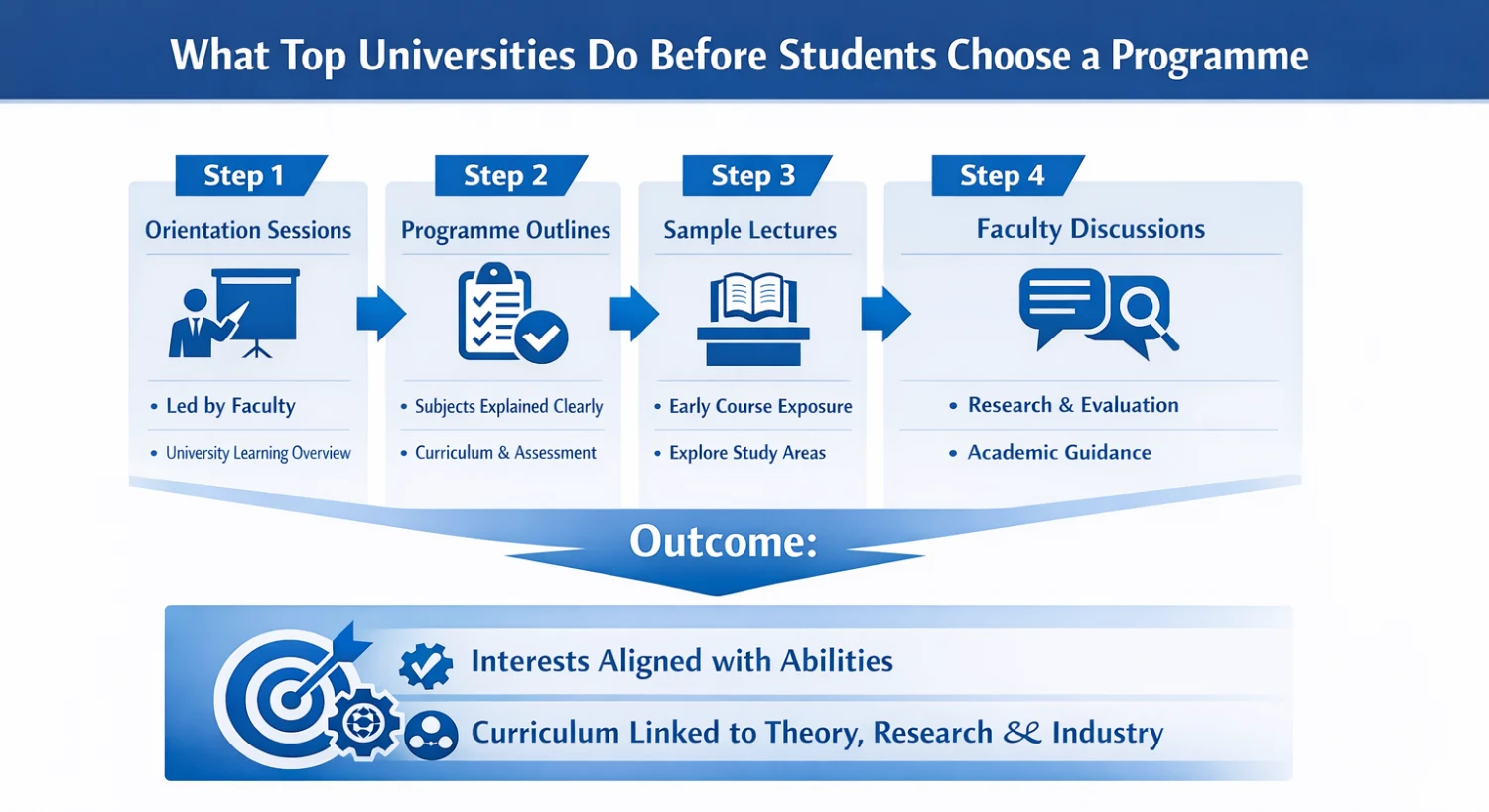
Well-run universities treat programme choice as part of education rather than an administrative step. Time and academic resources are invested to help students understand learning structures.
Key academic practices include:
- Orientation sessions led by teaching staff rather than admission teams
- Programme outlines that explain subjects using plain language.
- Access to sample lectures or foundation-level modules
- Faculty-led discussions on workload, research expectations, and evaluation
Among the best Universities in Hyderabad, these practices help students align interest with their academic abilities. At MNR University, schools such as SMHS and SOPR follow structured curriculum planning. Courses integrate Industry 4.0 concepts, research exposure, and soft skills in a planned manner, allowing students to see how study connects with future academic or professional roles.
How does the teaching approach affect long-term student success?
The way a subject is taught often matters as much as the subject itself. Teaching methods shape how students think, write, analyse, and solve problems.
Strong academic environments focus on:
- Faculty with both teaching and research experience
- Learning through projects, case studies, and laboratory work
- Regular feedback rather than reliance on a single final examination
- Opportunities for interdisciplinary learning
MNR University, one of the best Universities in Hyderabad, has developed innovation laboratories and research support systems that encourage practical learning. Patent guidance, startup incubation, and live projects help students apply theory in real settings. These experiences support steady academic growth and informed career planning.
Comparing degree choice support across universities
| Academic Area | MNR University | General Admission-Focused Institutions |
| Programme guidance | Faculty-led academic counselling | Basic admission information |
| Curriculum design | Linked to research and industry needs | Often subject-centred only |
| Teaching methods | Mix of lectures, labs, and projects | Lecture-heavy approach |
| Career readiness | Gradual skill development | Limited structured exposure |
| Student support | Ongoing mentoring | Support mainly during examinations |
This comparison highlights how institutional structure affects student understanding and academic progress.
Conclusion
Choosing a degree is a learning decision rather than a quick choice. Universities that invest in academic guidance, thoughtful teaching methods, and research exposure support steady student development. MNR University, one of the reputed private Universities in Hyderabad, with its established academic presence of 50+ years, industry partnerships, and global connections, reflects this approach within its academic environment. Over time, students benefit from understanding how they learn and how their studies support long-term academic growth.
Unsure if your degree choice aligns with your future? Let our expert faculty guide your potential. Discover the MNR University difference in academic mentorship today.
Follow us on : Instagram
Frequently Asked Questions
No. Universities should help students explore options during the early years of study.
In structured universities, internal pathways and electives allow gradual shifts.
Yes. It gives context to the theory and improves understanding of subject relevance.
Early guidance shapes study habits and academic confidence.
Related Blogs
Decoding Cognitive Disorders With Neuroscience Data Analytics
Human brains generate massive amounts of complex electrical information every single second. Capturing and understanding…
Career Opportunities After BSc in Neuroscience: Jobs, Salary, and Higher Studies
Stepping into the field of brain science raises one big question for most students. What…
Career After B. Optometry in India: Jobs, Salary and Growth Path (2026)
Are you willing to step into the field of optometry? If yes, then your decision…
This Is Why Popular Engineering Colleges Are Struggling to Place Graduates | Click to Know
Engineering graduates across India face a tough job market these days. Even students from well-known…
Why Graduates Will Need More Than Just an Academic Degree to Succeed in 2026
Let’s think back to the news headlines: technology giants bypassed recent degree holders in favour…

Emerging Technology Careers and Engineering Pathways in 2026
Technology shapes every modern industry across the globe today. Students entering higher education look for…