
10 Game-Changing Advantages of Internet of Things Every Engineering Student Must Know
Home / MNR University / 10 Game-Changing Advantages of Internet of Things Every Engineering Student Must Know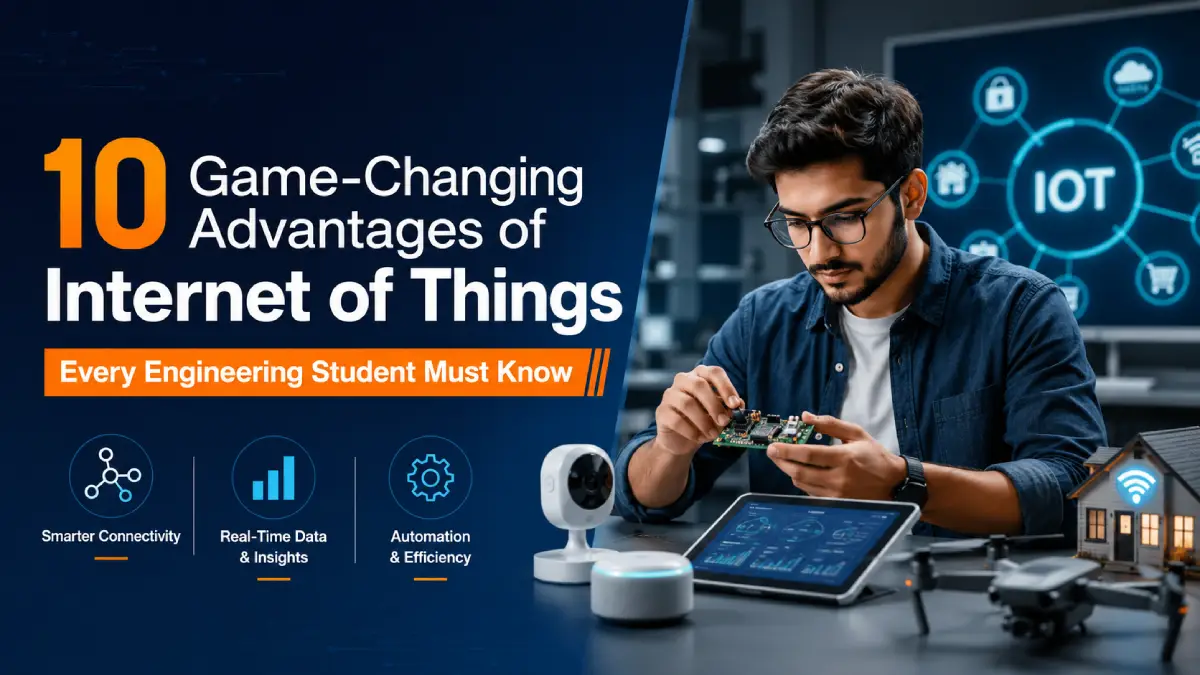
Every smart watch that counts steps, every home speaker that answers a question, and every fitness band that checks a heartbeat shares one thing in common. They all run on the Internet of Things. For engineering students, this is one of the most exciting fields to enter right now. A course on internet of things opens a path into a world where machines talk to each other and make life easier for people everywhere.
The advantages of internet of things reach far beyond gadgets. From smart farms to smart hospitals, connected devices are changing how the world works. This blog explains ten game-changing benefits of IoT that every engineering student should know. It also shows the skills needed, how to begin while still in college, and why MNR University, Hyderabad, has become a popular place to study a course on internet of things in Telangana.
Why Is the Internet of Things Becoming the Backbone of Modern Engineering?
The Internet of Things, or IoT, means everyday objects that connect to the internet and share data. A sensor in a car, a smart meter in a home, or a tracker on a delivery van are all part of this network. These devices collect information, send it to the cloud, and act on it with very little human help.
The growth has been huge. The number of connected devices rises every year, and engineering students who learn this skill early will find strong demand for their talent. Studying a course on internet of things places students at the centre of this fast moving field. The figures below show how quickly it is expanding. Source links appear at the end of this article.
| Indicator | Figure | Source |
|---|---|---|
| Connected IoT devices (2024) | 18.5 billion | IoT Analytics |
| Connected IoT devices (2025) | 21.1 billion (up 14 per cent) | IoT Analytics |
| Connected IoT devices (2030, projected) | 39 billion | IoT Analytics |
| Global IoT market (2025) | About USD 547 billion (around INR 45 lakh crore) | MarketsandMarkets |
| Global IoT market (2030, projected) | About USD 865 billion (around INR 72 lakh crore) | MarketsandMarkets |
How Does IoT Make Everyday Devices Smarter and More Efficient?
The first big benefit is smart automation. IoT lets devices run tasks on their own. Smart homes can switch off lights when a room is empty. Smart appliances can start washing clothes at the cheapest power hour. Voice assistants can lock doors, play music, and set reminders with one command. This smart devices technology saves time, lowers electricity bills, and makes everyday life smoother for families.
Why Is IoT Creating Massive Career Opportunities for Engineering Graduates?
IoT is opening a wide range of jobs. Companies need IoT engineers, embedded systems developers, data analysts, and AIoT specialists. Almost every industry, from car making to farming, now hires people who understand connected devices. The pay is attractive too, and it grows quickly with skill. The table below shows what IoT professionals can earn in India.
| Role or Metric | Figure | Source |
|---|---|---|
| IoT engineer salary (fresher, India) | INR 3 lakh to 7 lakh per year | upGrad |
| IoT engineer salary (average, India) | About INR 5.87 lakh per year | Glassdoor |
| IoT engineering services market (2024) | USD 31.22 billion (around INR 2.6 lakh crore) | upGrad |
| IoT engineering services market (2027, projected) | USD 71.25 billion (around INR 5.9 lakh crore) | upGrad |
A good IoT certification course can boost a fresher’s chances even further.
How Does IoT Improve Industrial Productivity and Manufacturing?
Factories use IoT to work faster and smarter. This is often called industrial IoT applications, or Industry 4.0. Machines fitted with sensors can warn staff before a part breaks down. This is known as predictive maintenance, and it cuts costly downtime. Smart factories track every step of production, reduce waste, and keep quality high. For engineering students, this area offers some of the most stable and well-paid roles.
Can IoT Improve Healthcare and Save Lives?
Healthcare is one of the strongest areas for IoT. Wearable devices track heart rate, sleep, and blood sugar in real time. Doctors can watch patients from far away through remote monitoring, which helps people in villages reach good care. Smart hospitals use connected beds and equipment to respond faster during emergencies. These tools help save lives and ease the load on medical staff.
How Is IoT Making Cities Smarter and More Sustainable?
Cities around the world use IoT to solve everyday problems. Smart traffic lights ease jams by reading live road data. Connected bins tell waste trucks when they are full. Smart street lighting saves power by dimming when roads are empty. Public safety systems use cameras and sensors to alert police quickly. These ideas make cities cleaner, safer, and easier to live in.
Why Is Real-Time Data One of the Biggest Advantages of Internet of Things?
One of the biggest advantages of internet of things is real time data. Sensors collect facts every second and send them for analysis. Businesses use this information to make quick and smart choices. A shop can restock items before they run out. A farmer can water crops only when the soil is dry. This data led decision making helps companies save money and serve customers better.
How Does IoT Help Energy Saving and the Environment?
IoT plays a strong part in protecting the planet. Smart grids send electricity only where it is needed, which cuts waste. Smart water meters spot leaks early and save precious water. Connected sensors help track pollution and lower the carbon footprint of factories. Green technology powered by IoT supports a cleaner future for the next generation.
What Role Does IoT Play in the Future of Artificial Intelligence?
When IoT joins hands with Artificial Intelligence, the result is called AIoT. In plain words, IoT gives the data, and AI makes sense of it. This pairing leads to smart machines that learn and improve on their own. Self learning factories, smart assistants, and predictive health tools all use AIoT. For students, this blend of skills is one of the most valuable to learn for the years ahead.
How Is IoT Changing Transport and Mobility?
Transport is becoming smarter thanks to IoT. Connected vehicles share traffic and weather updates with each other. Self driving cars use sensors to read the road. Fleet managers track trucks live to plan the best routes. Smart logistics make sure parcels reach homes on time. This connected device technology is making travel safer and delivery faster across India.
Why Are Businesses Investing Billions in IoT?
Companies spend large sums on IoT because it brings clear returns. Connected systems cut costs by spotting faults early. They improve everyday operations and reduce manual work. They also help firms understand customers and offer better service. A business that uses IoT well gains a strong edge over rivals. This is why IoT spending keeps climbing year after year.
What Skills Should Engineering Students Learn to Build a Career in IoT?
Students who want a future in IoT should build a strong skill set. The key skills include the following.
- Programming languages such as Python, C, and Java.
- Knowledge of sensors and microcontrollers like Arduino and Raspberry Pi.
- Cloud computing to store and manage device data.
- AI and Machine Learning to make devices smarter.
- Cybersecurity to keep connected systems safe.
- Networking basics, including protocols such as ZigBee, LoRa, and BLE.
How Can Engineering Students Start Their IoT Journey in College?
Students do not need to wait until they graduate. They can begin right away with small steps.
- Build mini projects with simple sensor kits.
- Join an IoT certification course to learn industry tools.
- Take part in hackathons to solve real problems.
- Help with research projects under faculty guidance.
- Apply for internships to gain real exposure.
Is IoT the Future of Engineering and Innovation?
All signs point to a bright future for IoT. Experts expect tens of billions of connected devices by 2030 and beyond. As 5G, AI, and cloud computing grow stronger, IoT will touch almost every part of life. For engineers, IoT skills are fast becoming as basic as knowing how to code. Students who learn it now will lead the smart world of tomorrow.
Why Should Students Choose MNR University for a Course on Internet of Things?
MNR University in Hyderabad offers a B.Tech in Electronics and Communication Engineering with a specialisation in the Internet of Things. The programme helps students design smart IoT systems, build sensor networks, and link hardware with software. A course on internet of things here mixes classroom theory with plenty of practical work. Key strengths of the university include the following.
- A B.Tech ECE (IoT) programme that covers sensors, embedded systems, cloud, and security from an early stage.
- Advanced laboratories with industry grade robotics and research facilities.
- Live projects, hackathons, internships, and corporate mentoring.
- Startup incubation, patents, and funded research for curious minds.
- Merit scholarships and steady placement support.
- A respected legacy of over fifty years in education.
MNR University sits near Hyderabad, one of India’s major technology hubs, which gives students extra exposure to companies and innovation. Please confirm the latest accreditations and rankings on the official website.
Final Thoughts
The advantages of internet of things stretch across homes, hospitals, factories, farms, and cities. This field is growing fast, paying well, and shaping the future of engineering. For students who dream of building smart machines that help people, a course on internet of Things is a wise and future ready choice. With strong labs, real projects, and good industry links, MNR University gives young engineers a solid place to start this exciting journey.
Frequently Asked Questions
Smart automation, better healthcare, smarter cities, real time data, energy saving, stronger careers, and higher business efficiency are among the top advantages.
IoT is one of the fastest growing fields and offers strong jobs across almost every industry, so early skills give students a clear edge.
Common roles include IoT engineer, embedded systems developer, data analyst, AIoT specialist, and IoT security expert.
IoT collects data from devices, and AI studies that data so machines can learn, predict, and act on their own. This mix is called AIoT.
Electronics and Communication Engineering and Computer Science Engineering are both strong choices, especially an ECE programme with an IoT specialisation.
Yes. India is adopting IoT across healthcare, farming, manufacturing, and smart cities, so demand for skilled engineers keeps rising.
Programming, sensors and microcontrollers, cloud computing, AI and Machine Learning, cybersecurity, and networking basics.
Manufacturing, healthcare, automotive, agriculture, smart cities, energy, and consumer electronics are the heaviest users.
IoT connects devices and shares data, while AIoT adds Artificial Intelligence so those devices can think and improve over time.
Yes. MNR University offers a B.Tech in Electronics and Communication Engineering with a specialisation in the Internet of Things.
Related Blogs
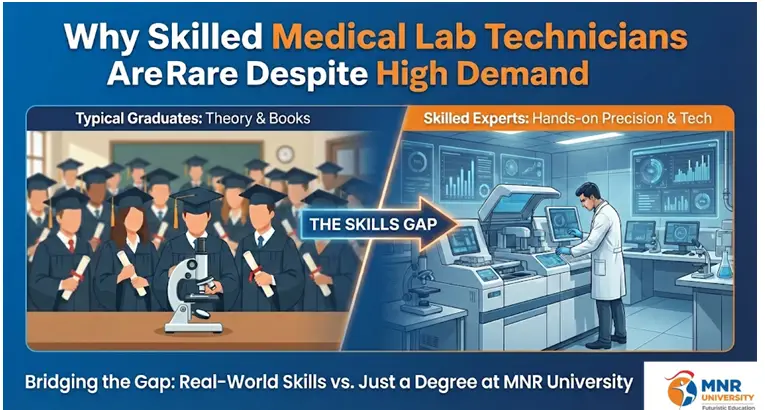
Why Skilled Medical Lab Technicians Are Rare Despite High Demand
A doctor looks at a patient, but a laboratory professional looks at the truth hidden…
Optometry Courses After 12th: Eligibility, Duration, Fees and Career Path (2026 Guide)
Many students don’t consider eye care as their first career option when they think about…
Future Scope of AI Engineering in India: Career Trends 2026
Have you completed your 12th standard examination and are brooding over the finest career path…

CBSE Class 12 Result 2026: Everything You Need to Know — and What Comes Next
The CBSE Result season is one of the most defining moments in a student’s academic…
Geriatric Innovations: Physiotherapy Tackling Aging Challenges
India faces a massive demographic shift as life expectancy rises steadily. This transition creates an…

Why CSE is the #1 Career Choice for Students in Hyderabad in 2026
Hyderabad is popularly known as one of the best IT cities in India. Various reports…