
Physiotherapy Course After 12th: Everything Students Need to Know
Home / MNR University / Physiotherapy Course After 12th: Everything Students Need to Know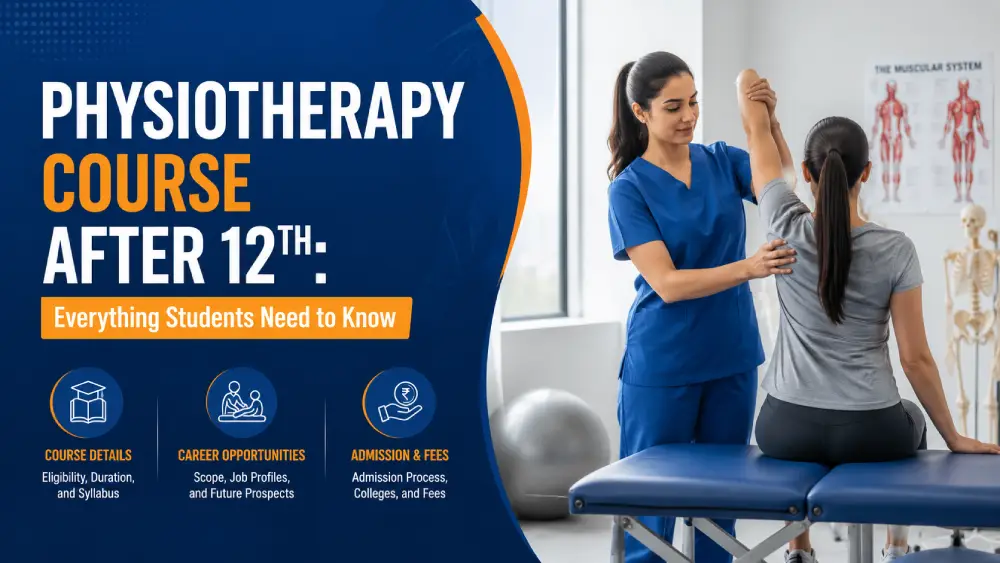
Choosing a career path after school can feel like standing at a busy crossroads. So many options, so many opinions, and a future that feels both exciting and unsure. For students who care about health, movement, and helping people recover, a bachelor in physiotherapy course offers a clear and rewarding direction. A physiotherapy course after 12th trains young people to treat injuries, ease pain, and help patients move freely again, all without relying on heavy medicine or surgery.
Physiotherapy is now one of the fastest-growing health professions in India. Hospitals, sports academies, rehabilitation centres, and wellness clinics all need skilled hands. This guide walks students and parents through everything that matters: what the course covers, who can apply, what the BPT admission process looks like, the careers waiting at the end, and what new graduates can earn. It also explains why MNR University, Hyderabad, has become a popular choice for a bachelor in physiotherapy course in Telangana.
What Is a Bachelor in Physiotherapy Course?
A bachelor in physiotherapy course, known as BPT, is an undergraduate medical degree that teaches students how the human body moves and how to bring back that movement after injury or illness. The programme usually runs for four and a half years, which includes a six-month clinical internship in a hospital.
Students learn to assess muscles, joints, and nerves, then plan treatments using exercise, hands-on techniques, and modern equipment. Unlike a doctor who prescribes medicine, a physiotherapist uses physical methods such as therapeutic exercise, electrotherapy, and manual care to rebuild strength and mobility. The work is practical, people-focused, and deeply satisfying for those who enjoy direct patient contact.
Why Should Students Consider a Physiotherapy Course After 12th in 2026?
The need for physiotherapists in India is large and growing. The World Health Organisation suggests one physiotherapist for every 10,000 people, yet India currently has far fewer than that target. This wide gap means qualified graduates rarely struggle to find work.
Several reasons explain the rising interest. An ageing population needs long-term rehabilitation. Lifestyle conditions such as back pain, diabetes, and arthritis are becoming common. Sports culture is expanding fast, and so is the call for sports physiotherapy. A physiotherapy course after 12th places students right at the centre of this demand.
How Strong Is the Demand for Physiotherapists in India?
The figures below show why physiotherapy has become a stable career choice. Full source links are listed at the end of this article.
| Indicator | Figure | Source |
| WHO recommended ratio | 1 physiotherapist per 10,000 people | WHO / IAP |
| India’s present ratio | About 0.59 per 10,000 people | Physiopedia |
| People needing therapy at some stage | Around 10 to 15 per cent of Indians | Physio Heal Well |
| Registered physiotherapists in India | Around 2,00,000 | Physio Heal Well |
What Are the Eligibility Criteria for the BPT Admission Process?
The BPT admission process is straightforward for most students. The basic requirements are listed below.
- Completion of 10+2, or an equivalent qualification, with Physics, Chemistry, and Biology as main subjects.
- A minimum aggregate score, usually around 50 percent, in the qualifying examination.
- A minimum age of 17 years at the time of admission .
Some institutions admit students on the merit of board results, while others may use an entrance step. Students should always check the official MNR University website for the current intake rules.
What Will Students Learn During the Course?
The curriculum blends classroom theory with real practice. The early years focus on the building blocks of the human body. The later years move into treatment skills and live patient care.
- Anatomy and Physiology, the foundation of all medical study.
- Biomechanics, which explains how the body moves.
- Electrotherapy and Manual Therapy, the main treatment tools.
- Exercise Therapy and a rehabilitation science course module, used to rebuild strength.
- Clinical postings in hospitals from the second year onward.
Students who enjoy a particular area can later specialise. Popular options include a sports physiotherapy course for those drawn to athletes and rehabilitation work for students who want to help patients recover after a stroke or surgery.
What Career Options Open Up After a Bachelor in Physiotherapy Course?
A bachelor in physiotherapy course opens doors across many settings. Graduates are not limited to one type of workplace. Common career paths include the following.
- Hospitals and rehabilitation centres.
- Sports teams, gyms, and fitness studios.
- Private clinics and home care services.
- Government health programmes and community outreach.
- Roles abroad, where qualified Indian physiotherapists are in steady demand.
After gaining experience, many graduates open their own clinics or move into teaching and research. Higher study through a Master of Physiotherapy (MPT) can lead to senior clinical and academic roles.
How Much Can a Physiotherapist Earn in India?
Earnings depend on experience, location, and specialisation. Metro cities and senior roles pay the most. The table below gives a general idea.
| Stage | Typical Annual Salary (INR) | Source |
| Fresher (BPT graduate) | 2.5 lakh to 3 lakh | Collegedunia |
| 4 to 5 years experience (BPT) | 3 lakh to 5.33 lakh | GeeksforGeeks |
| Postgraduate (MPT) with experience | Around 7 lakh | Collegedunia |
In several developed countries a one-hour private session can cost roughly INR 6,200 to INR 12,500. This is one reason many Indian physiotherapists look at opportunities overseas.
What Makes MNR University a Strong Choice for BPT?
MNR University in Hyderabad has built a clear name in health sciences education. Its School of Physiotherapy gives students a learning experience that goes beyond textbooks. Key strengths include the following.
- A curriculum built around what hospitals and clinics actually look for in fresh graduates.
- Supervised clinical rotations in teaching hospitals from an early stage.
- Well-equipped laboratories for electrotherapy, exercise therapy, and movement study.
- A learning approach that uses modern technology, projects, and peer work.
- Access to a medical college campus, which gives strong real-world clinical exposure.
- Career guidance for jobs, postgraduate study, and research.
The university sits near the Greater Hyderabad region, one of India’s fast-growing healthcare and medical education hubs. This location gives students extra exposure to hospitals, sports medicine, and rehabilitation services. Please confirm the latest accreditations, affiliations, and rankings on the official website.
How Can Students Apply for a Bachelor in Physiotherapy Course at MNR University?
A bachelor in physiotherapy course at MNR University welcomes fresh applications each academic year. The steps are simple.
- Visit the official MNR University website and open the BPT admissions page.
- Fill in the admission enquiry or application form with personal and academic details.
- Submit the required documents, such as 10+2 mark sheets and identity proof.
- Complete any counselling or selection step as advised by the admissions team.
Students and parents who want exact dates and a full document list should contact the university admissions office directly.
Final Thoughts
A career in physiotherapy rewards patience, care, and a real wish to help people heal. For students who feel that pull, a bachelor in physiotherapy course is a smart and future-ready choice. The demand is real, the work is meaningful, and the growth path is wide. With strong clinical training and modern facilities, MNR University gives students a solid place to begin this journey. Families looking for a stable and respected health career will find that a physiotherapy course after 12th is a decision worth making.
Frequently Asked Questions
It is an undergraduate medical degree, also called BPT, that trains students to treat injuries and restore movement using exercise, manual therapy, and electrotherapy rather than medicine or surgery.
The BPT course usually runs for four and a half years, which includes a six-month clinical internship.
Students need to have passed 10+2 with Physics, Chemistry, and Biology, usually with a minimum aggregate score set by the institution.
In most states BPT does not require NEET. Admission is generally based on 10+2 merit or a university or state-level process. Please confirm for the current year.
Core subjects include anatomy, physiology, biomechanics, exercise therapy, electrotherapy, manual therapy, and rehabilitation science, along with clinical postings.
Students apply through the official MNR University website, submit their academic documents, and complete any counselling or selection step advised by the admissions team.
Graduates work in hospitals, rehabilitation centres, sports teams, fitness studios, private clinics, government health programmes, and overseas healthcare settings.
Freshers usually earn around INR 2.5 lakh to 3 lakh per year. With four to five years of experience this rises to around INR 3 lakh to 5.33 lakh, and postgraduates can reach about INR 7 lakh.
Yes. Qualified Indian physiotherapists are in steady demand overseas, though most countries ask for a licensing or registration step.
BPT is the undergraduate degree, while MPT is a postgraduate degree that allows specialisation in areas such as orthopaedics, neurology, or sports.
Yes. India has far fewer physiotherapists than the World Health Organisation recommends, so demand for qualified graduates remains strong.
Yes. MNR University provides supervised clinical rotations in teaching hospitals and access to a medical college campus for real patient exposure.
Related Blogs
Is BPT a Good Career in 2026? The Future Scope of Physiotherapy in India
Healthcare in India places physiotherapy at the heart of patient recovery, and the best physiotherapy…
Emerging Science Careers in India: Degrees That Employers Will Value in the Next Decade
Science has always drawn curious minds. Yet the kind of science jobs that pay well…

Is Machine Learning More About Maths Than Coding?
We often look at applications like ChatGPT or self-driving cars and assume they run…
Optometry Courses After 12th: Eligibility, Duration, Fees and Career Path (2026 Guide)
Many students don’t consider eye care as their first career option when they think about…
Is Your Code Writing Itself? Why the ‘Human’ Element Matters in a Machine Learning Course in Hyderabad
Code now generates code. Tools like GitHub Copilot churn out lines of code faster than…
BSc Optometry Fees in India 2026: Government vs Private Colleges and What Affects the Cost
A career in eye care starts with one practical question: how much does the course…