
Top 10 Careers in Allied and Healthcare Sciences That Will Shape the Future of Healthcare
Home / School of Allied Sciences / Top 10 Careers in Allied and Healthcare Sciences That Will Shape the Future of Healthcare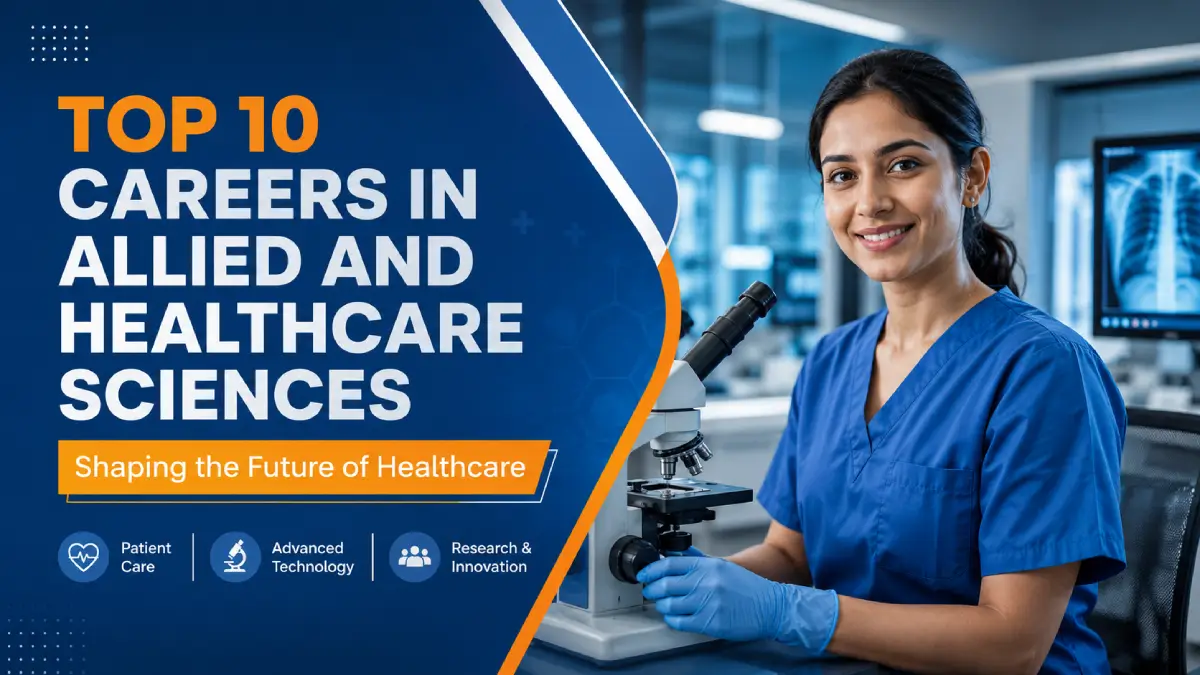
The world of healthcare is much bigger than doctors and nurses. Behind every diagnosis, surgery, and recovery stands a skilled team of allied health professionals. These are the people who run lab tests, capture scans, support operations, and help patients heal. For students who dream of a medical career without studying MBBS, this field opens a wide and exciting door.
Allied and healthcare sciences are now among the fastest-growing career areas in India. Hospitals, diagnostic centres, and clinics all need trained hands, and the shortage of such workers is large. This blog looks at the top ten careers in this field that will shape the future of healthcare. It also covers the skills needed, salary ranges, global chances, and why MNR University, one of the top colleges in greater Hyderabad, has become a favoured place to study these courses. Families comparing top private colleges in Hyderabad will find plenty to think about here.
What Are Allied and Healthcare Sciences, and Why Do They Matter in Modern Healthcare?
Allied and healthcare sciences cover a wide group of health jobs that support doctors and nurses. In India, this field spans ten broad categories and over fifty different roles, from lab technologists to radiographers. These professionals play a key part in diagnosis, treatment, rehabilitation, and everyday patient care. Without them, hospitals simply could not run.
The demand is climbing fast. India has far fewer allied health workers than developed nations, which leaves a large gap to fill. The table below shows how serious this shortage is.
| Indicator | Figure | Source |
|---|---|---|
| Allied health workers in India (2022) | About 7 per 10,000 people | Nathealth India |
| Same ratio in the USA and UK | 151 (USA) and 22 (UK) per 10,000 | Nathealth India |
| Unmet demand for allied health staff in India | Around 30 to 40 per cent | Apollo University |
| New allied health staff India plans to add (5 years) | 1 lakh (100,000) | Union Budget 2026 |
| Projected global health worker shortage (2030) | About 11.1 million | WHO |
Why Are Students Choosing Allied and Healthcare Sciences Over Traditional Medical Careers?
Many students now pick allied health over the long road of MBBS, and the reasons are clear. The courses are shorter, often three to four years, so graduates start earning sooner. The job options are wide, with roles in hospitals, labs, sports centres, and research. Modern tools like AI and digital scans make the work exciting. Best of all, the demand reaches across the globe, so skilled professionals can build careers in India or abroad. This is why top colleges in greater Hyderabad report rising interest in these programmes.
What Skills Future Healthcare Professionals Must Know?
Success in allied health needs a mix of knowledge and people skills. The main ones include the following.
- Strong technical know-how of medical tools and laboratory equipment.
- Digital healthcare skills, such as handling scans, records, and software.
- Clear communication and real empathy for worried patients.
- Awareness of AI and new healthcare technology.
Which Are the Top 10 Careers in Allied and Healthcare Sciences That Will Shape the Future?
Here are ten careers that offer strong demand, good pay, and a bright future.
- Medical Laboratory Technology: Lab technologists test blood, urine, and tissue to help doctors find the cause of illness. As diagnosis depends heavily on lab reports, this role sits at the centre of modern medicine.
- Radiology and Medical Imaging: These experts run CT, MRI, and ultrasound machines to look inside the body. Their scans help spot diseases early, when treatment works best.
- Physiotherapy: Physiotherapists help people move again after injury, surgery, or illness. With rising sports injuries and lifestyle disorders, demand for them keeps growing.
- Operation Theatre and Anaesthesia Technology: These technologists prepare the operating room and support surgeons and anaesthetists during surgery. Every safe operation depends on their careful work.
- Optometry: Optometrists check eyesight and treat common eye problems. As screen time and eye disorders rise, their skills are needed more each year.
- Emergency and Critical Care Technology: These professionals support patients in the ICU and during medical emergencies. They help save lives in the most urgent moments.
- Cardiovascular and Perfusion Technology: These experts assist during heart procedures and run the heart-lung machine in surgery. With heart disease cases rising, this is a future-ready field.
- Renal Dialysis Technology: Dialysis technologists run the machines that clean the blood of patients with kidney failure. As kidney disease spreads, their role grows in value.
- Respiratory Therapy: Respiratory therapists treat patients with breathing problems and lung disease. Their importance grew sharply after the pandemic.
- Healthcare Data and Digital Health: This new field covers health records, telemedicine, and AI-based health tools. It joins healthcare with technology, opening fresh and well-paid jobs.
How Is Technology Reshaping Careers in Allied and Healthcare Sciences?
Technology is changing how allied health works. Artificial Intelligence helps read scans and spot patterns faster. Robots assist in surgery with great precision. Wearable devices track health at home and send data to doctors. Digital diagnostics and telehealth let patients reach care from far away. Students who learn these tools early will stand out in the job market.
Which Allied Healthcare Careers Offer the Best Salary and Growth?
Pay in allied health rises with skill, experience, and certificates. Some roles, such as imaging and cardiac care, pay very well. The table below gives indicative salary ranges in India. Actual figures change with city, hospital, and experience.
| Career | Typical Salary Range INR per year |
Source |
|---|---|---|
| Medical Laboratory Technology | 2.5 lakh to 10 lakh | Dheya |
| Radiology and Imaging | 3.5 lakh to 10 lakh | Dheya |
| Physiotherapy | 2.5 lakh to 7 lakh | Collegedunia |
| OT and Anaesthesia Technology | 2.6 lakh to 6 lakh | Henry Harvin |
| Optometry | 2.5 lakh to 6 lakh | Indicative |
| Cardiovascular and Perfusion | 3 lakh to 8 lakh | Indicative |
| Renal Dialysis Technology | 2 lakh to 4 lakh | Indicative |
| Healthcare Data and Health Records | 4 lakh to 12 lakh | Indeed |
What Are the Global Opportunities for Allied Healthcare Professionals?
Allied health skills travel well across borders. Countries such as the United States, the United Kingdom, Canada, Australia, and the Gulf nations face large shortages and welcome trained Indian professionals. In the United States, allied health workers earn around INR 66 lakh per year on average, far above Indian pay. With the right certifications and licences, graduates from India can build strong careers abroad.
How Can Students Prepare for a Successful Career in Allied and Healthcare Sciences?
A good start makes a big difference. Students who plan well move ahead faster.
- Choose the right course and pick from the top colleges in greater Hyderabad with strong clinical training.
- Gain plenty of practical work in real hospital settings.
- Look for industry exposure through hospital visits and live projects.
- Add certifications and internships to build a strong profile.
Why Is Now the Best Time to Build a Career in Allied and Healthcare Sciences?
All the signs point one way. India is building new hospitals and upgrading old ones. The government plans to add one lakh allied health professionals in the next five years. The demand for Indian healthcare workers is set to double by 2030. For students who act now, the timing could hardly be better.
Which Allied and Healthcare Courses Does MNR University Offer?
MNR University in Hyderabad runs a wide School of Allied and Healthcare Sciences. Its four-year B.Sc (Hons) programmes cover most of the careers listed above, including the following.
- Medical Laboratory Technology
- Radiology and Image Technology
- Anaesthesiology and OT Technology
- Cardiac and Perfusion Technology
- Renal Dialysis Technology
- Emergency Medical Technology
- Respiratory Therapy Technology
- Optometry
- Neuro Science and Technology
The university also offers a Bachelor of Physiotherapy (BPT). Among the top private colleges in Hyderabad, MNR stands out for the sheer range of its healthcare courses.
Why Choose MNR University Among the Top Colleges in Greater Hyderabad?
As one of the well-known top colleges in greater Hyderabad, MNR University gives healthcare students a strong base to grow. Its main strengths include the following.
- A School of Allied and Healthcare Sciences with modern laboratories and competency based teaching.
- Extensive clinical exposure through teaching hospitals and real patient care.
- An industry ready curriculum shaped around what employers want.
- Scholarships, internships, and steady placement support.
- Short international study tours that add global exposure.
- A respected legacy of over fifty years in education.
The campus sits near Hyderabad, a major medical and technology hub, which gives students rich exposure to leading hospitals. Please confirm the latest accreditations and rankings on the official website.
Wrapping:
Allied and healthcare sciences offer a path that is stable, respected, and full of meaning. Whether a student loves lab work, scans, heart care, or helping patients recover, there is a role to match. The field is growing, the pay is improving, and the world needs these skills more each day. For young people ready to begin, choosing from the top colleges in greater Hyderabad is a wise first step. As one of the leading top private colleges in Hyderabad, MNR University offers the courses, training, and support to turn that dream into a career.
Frequently Asked Questions
Roles such as medical imaging, cardiovascular technology, and healthcare data tend to pay the most, often reaching INR 8 lakh to 12 lakh per year or higher with experience.
Yes. India has only about 7 allied health workers per 10,000 people, far below developed nations, so demand is very high.
Radiology, physiotherapy, cardiovascular technology, and healthcare data all offer strong future scope due to rising patient needs.
Yes. Countries such as the USA, UK, Canada, Australia, and the Gulf welcome trained Indian allied health professionals who hold the right certifications.
MBBS trains doctors over five and a half years, while allied health courses run for three to four years and train support specialists in fields such as imaging, therapy, and lab science.
Yes. It offers quick entry into healthcare, strong job demand, and many paths to grow, making it a smart choice after 10+2.
AI in diagnosis, robotics in surgery, wearable health devices, telemedicine, and digital health records are the main trends ahead.
Students usually need to have passed 10+2 with science subjects such as Physics, Chemistry, and Biology. Please check the official website for current rules.
The B.Sc (Hons) allied health programmes at MNR University run for four years, including clinical training.
Yes. MNR University offers extensive clinical exposure through its teaching hospitals and modern laboratories.
Related Blogs
Can Average Students Build a Career in Neurosciences?
Neuroscience is one of the most rewarding fields of study in India today, and students…
BSc Renal Dialysis Technology: Course Details, Scope, Salary & Career Opportunities in 2026
Stepping into the field of kidney care opens the door to a healthcare job that…
What Is an Anaesthesia Technology Course? Scope, Syllabus & Career Paths in India
Healthcare is one of the fastest-growing sectors in India. New hospitals, specialised clinics, trauma centres,…
B.Sc Radiology Colleges in India: Course, Jobs, Salary and Scope in 2026
Every hospital visit usually begins with a picture. A doctor studies an X-ray, a scan…
BSc Optometry Fees in India 2026: Government vs Private Colleges and What Affects the Cost
A career in eye care starts with one practical question: how much does the course…
How B.Sc. Respiratory Therapy Course Prepares Graduates to Revolutionise Urban Air Quality Management
In growing megacities where every breath counts, a highly specialised wave of healthcare professionals is…