
Wearable Sensors for Circulation: The Future Role of the Perfusionist
Home / School of Allied Sciences / Wearable Sensors for Circulation: The Future Role of the Perfusionist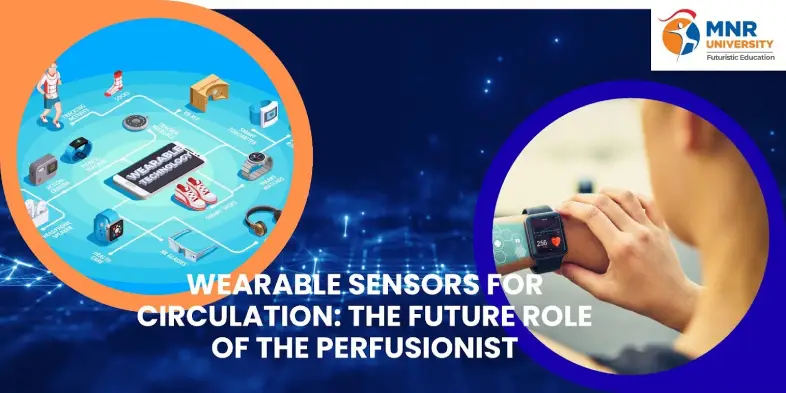
A Bachelor of Science (B.Sc.) in Perfusion Technology introduces students to a rapidly advancing field where sophisticated, miniaturised wearable devices continuously monitor blood flow, alerting medical teams to potential complications long before they manifest clinically. Perfusionists, recognised as the master specialists of circulatory support, are increasingly tasked with interpreting complex data from transdermal skin patches that measure tissue oxygen delivery during surgical procedures and postoperative recovery.
Fitted much like modern smartwatches, these medical-grade devices transmit live telemetry regarding arterial pressure and peripheral tissue perfusion. This continuous stream of data empowers perfusionists to remotely calibrate and fine-tune heart-lung bypass machines. Modern healthcare facilities rely heavily on these analytical insights to minimise patient recovery times and prevent severe complications, such as thrombosis, in high-risk individuals. For aspiring medical professionals, this specialisation offers a unique opportunity to seamlessly blend technological proficiency with critical vascular expertise.
What Defines Perfusion Technology in Wearable Monitoring?
Leading B.Sc. Perfusion Technology colleges equip students with the expertise to manage advanced devices that monitor circulation non-invasively. While traditional perfusion involves sustaining artificial blood flow and oxygenation during open-heart surgeries, the advent of clinical wearables extends this critical care into daily patient management. Students are trained to rigorously analyse digital signals from sensors that detect microvascular changes, which is vital for the ongoing care of cardiac patients.
The academic training begins with a comprehensive foundation in hemodynamics, the physical laws governing blood flow through the vascular system. Advanced modules progressively cover the integration of wireless technology, teaching students how to precisely calibrate wearable devices so they synchronise with central hospital monitoring systems. In clinical practice, perfusionists review critical diagnostic trends, such as sudden drops in the perfusion index (which may indicate compromised limb circulation), and adjust therapeutic interventions accordingly.
This rigorous preparation qualifies graduates for pivotal roles in Intensive Care Units (ICUs), where continuous data analysis is essential for early anomaly detection. Everyday applications include monitoring postoperative wearables that provide haptic alerts for low perfusion thresholds, enabling immediate clinical intervention.
Core Competencies Acquired:
- Sensor Calibration: Utilising precise techniques to ensure accurate, artifact-free blood flow readings.
- Data Interpretation: Analysing continuous telemetry for real-time circulatory adjustments.
- System Integration: Syncing wearable data with extracorporeal heart-lung bypass systems during complex procedures.
How Do Healthcare Wearables Change Perfusionist Responsibilities?
The integration of wearable technology is fundamentally expanding the scope of a perfusionist’s responsibilities. Traditionally confined to the operating room, these professionals are increasingly transitioning into roles as continuous, round-the-clock clinical data analysts. A B.Sc. in Perfusion Technology teaches students to fuse the output from wearable sensors directly with the mechanical controls of perfusion machines.
Academic coursework thoroughly details the predictive algorithms used to forecast circulatory failures based on subtle pulse wave variations. Students master the troubleshooting of sensor drift, often caused by patient movement or diaphoresis (sweating), ensuring the reliability of clinical metrics. The curriculum heavily emphasises job-ready skills, such as programming customised alerting thresholds for ambulatory patients. Within the degree program, laboratory simulations mimic real-world scenarios: for instance, evaluating a marathon runner whose wearable device flags a high risk for compartment syndrome, thereby prompting an immediate vascular support strategy.
Furthermore, collaborative partnerships with global institutions, including Cumberland University, Wayland Baptist University, Faulkner University, Campbellsville University, and St. Francis College, add significant depth to the curriculum. Joint academic sessions explore international standards for wearable technology across diverse healthcare environments.
Why Enter Perfusion Technology Amid Sensor Advancements?
The rise of medical wearables demands perfusionists who command a deep understanding of both human biology and digital data architecture. Professional opportunities are multiplying rapidly within the telehealth sector, where specialists can remotely oversee the circulatory health of outpatients via secure, centralised dashboards. Hospitals actively seek experts capable of managing hybrid healthcare systems that combine ambulatory wearables with traditional extracorporeal circuits.
Premier B.Sc. Perfusion Technology colleges highlight these technological advantages through intensive, hands-on capstone projects. Students build operational prototypes that interface diagnostic sensors directly with perfusion pumps, cultivating a skill set highly prized by modern healthcare employers. Fields such as transplant surgery greatly benefit from this expertise, as continuous, precise monitoring is critical for preserving organ viability over extended periods.
The degree’s timeline is structured to build clinical proficiency progressively: early years concentrate on biological theory, intermediate stages focus on technological integration, and the final year emphasises leadership within advanced patient-monitoring teams.
Traditional vs. Wearable-Enabled Perfusion Roles
| Aspect | Traditional Perfusion | Wearable-Enhanced Perfusion |
| Monitoring Style | Periodic, manual checks during surgery. | Continuous, remote, real-time data streaming. |
| Response Time | Intra-operative adjustments only. | 24/7 proactive alerts enabling immediate care. |
| Skill Focus | Mechanical machine operation. | Sensor analytics and algorithmic data interpretation. |
| Patient Reach | Strictly in-hospital environments. | Extends comprehensive care into home recovery. |
What Makes MNR University a Premier Choice for Perfusion Training?
When selecting a program, MNR University stands out as a distinguished institution through its School of Allied and Healthcare Sciences. Nationally recognised and ranked #2 in Telangana and #5 all India by the Times All India Engineering Institutes Ranking 2025, and backed by 50 years of educational excellence, a faculty of 2,000, and 25 active academic partnerships, MNR delivers an exceptional B.Sc. in Perfusion Technology.
The university’s industry-aligned curriculum rigorously incorporates training on AI-driven wearables and global healthcare practices. Dedicated innovation laboratories foster student-led research, while seasoned clinical mentors guide live projects. Furthermore, strategic ties to international universities facilitate valuable student exchanges and global certifications, sharpening your competitive edge in medical sensor technology.
This comprehensive structure ensures the development of highly specific, role-ready abilities—such as advanced wearable perfusion mapping—entirely within the framework of the degree.
Frequently Asked Questions
The three-year program provides an exhaustive education in extracorporeal circulation support, the integration of wearable medical technology, and advanced hemodynamic monitoring, supported by extensive practical laboratory training.
MNR University is a leader in integrating wearable technology into its curriculum, achieved through hands-on industry projects and strategic global academic collaborations.
The university utilizes a progressive training model, moving from foundational biological principles to advanced technological integrations, all reinforced by mentor-guided clinical simulations.
Graduates gain a significant competitive edge through direct experience with wearable tech projects and clinical internships, thoroughly preparing them for modern roles in continuous patient monitoring.
Related Blogs
Anaesthesiology: A Fundamental Pillar of Modern Surgery
Modern healthcare relies heavily on the steady hands and technical expertise of clinical specialists during…
Advanced Ocular Therapeutics: Optometry in Laser and Virtual Reality
Human sight processes complex light patterns constantly, demanding absolute physical precision from our ocular systems….
Radiology Career: Why AI Will Never Replace Human Experts
Artificial intelligence continues to reshape modern healthcare systems at an unprecedented pace. Students entering the…
How B.Sc. Respiratory Therapy Course Prepares Graduates to Revolutionise Urban Air Quality Management
In growing megacities where every breath counts, a highly specialised wave of healthcare professionals is…
BSc MLT Under NCAHP: Advancing Clinical Diagnostics
Clinical diagnostics form the absolute backbone of modern medical interventions, where precise laboratory results directly…