
How B.Sc. Respiratory Therapy Course Prepares Graduates to Revolutionise Urban Air Quality Management
Home / School of Allied Sciences / How B.Sc. Respiratory Therapy Course Prepares Graduates to Revolutionise Urban Air Quality Management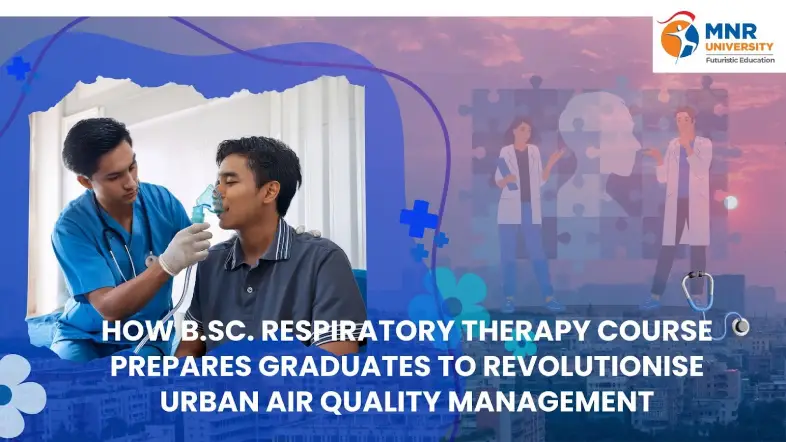
In growing megacities where every breath counts, a highly specialised wave of healthcare professionals is stepping forward to reshape the air we share. A deeper look into B.Sc. Respiratory Therapy course details reveal an innovative pathway designed to tackle urban pollution head-on, seamlessly blending advanced medical expertise with air pollution mitigation strategies.
Graduates of this dynamic allied health sciences program do not merely treat patients at the bedside. They lead pioneering public health efforts to monitor airborne toxins, design community-wide lung health initiatives, and integrate smart technology for cleaner skies. Picture clinical respiratory therapists deploying IoT air sensors in bustling streets, or advising policymakers on HVAC ventilation systems that cut respiratory risks in public spaces. This degree equips students to bridge healthcare delivery and city planning, turning environmental data on particulate matter (PM2.5) into actionable safeguards.
What Makes B.Sc. Respiratory Therapy Unique for Urban Challenges?
Modern urban air quality demands specialists who understand the intricate physiology of human lungs and the complex chemistry of atmospheric threats. Advanced respiratory therapy courses go far beyond basic biology. They train you to assess the direct impact of smog, volatile organic compounds (VOCs), and ground-level ozone on the respiratory tract.
- Epidemiological Tracking: You learn to track trends, from asthma and COPD spikes during peak traffic to the long-term pulmonary effects on vulnerable demographics.
- Cardiopulmonary Diagnostics: Core clinical training covers comprehensive diagnostics. You master sophisticated tools like spirometers and arterial blood gas analysers to measure lung capacity amidst heavy pollutant exposure.
- Proactive Fieldwork: The focus frequently shifts to mapping pollution hotspots and creating intervention plans for high-risk zones like urban schools and corporate workplaces.
What truly sets this degree apart is its emphasis on preventive strategies. By studying the environmental epidemiology of air-related diseases, you gain the analytical skills to forecast outbreaks and advocate for green infrastructure policies.
Curriculum Breakdown: Key Modules at a Glance
| Module | Core Focus Areas | Direct Urban Application |
| Pulmonary Physiology | Lung mechanics, gas exchange, and pathophysiology of COPD. | Analysing the localised effects of traffic pollution on oxygen uptake in city centres. |
| Air Quality Assessment | Pollutant sampling, VOC tracking, IoT sensor technology. | Deploying smart air monitors in commercial zones to harvest actionable AQI data. |
| Therapeutic Rehab | Mechanical ventilation, pulmonary rehabilitation, oxygen therapy. | Designing community respiratory wellness programs for poor Air Quality Index days. |
| Environmental Policy | Public health regulations, legislative advocacy tools. | Influencing municipal guidelines for cleaner public transport hubs. |
How Does a B.Sc. Respiratory Therapy Degree Builds Skills for Air Quality Leadership?
The specialised B.Sc. Respiratory Therapy course details heavily emphasise hands-on, multidisciplinary roles. You gain absolute proficiency in advanced life support and respiratory care management while exploring how climate anomalies, like urban heat islands, worsen respiratory strain. Courses integrate simulations of environmental crises, such as heavy industrial haze, teaching you how to coordinate emergency medical responses.
Job-specific training shines through laboratory work focused on aerosolised pharmacological therapies for compromised environments. Furthermore, MNR University’s global collaborations deeply enrich this learning experience. Partnerships with institutions like Cumberland University, Wayland Baptist University, Faulkner University, Campbellsville University, and St. Francis College provide vital international perspectives on respiratory medicine in global megacities.
Skill Development Timeline Across the Program
| Year | Core Clinical & Academic Skills Acquired | Practical Urban Health Outcomes |
| Year 1 | Cardiopulmonary anatomy, atmospheric pollutants, and basic patient care. | Conducting environmental air audits in simulated urban settings. |
| Year 2 | Advanced pulmonary diagnostics, pharmacology, and targeted aerosol therapy. | Leading mock medical interventions for pollution-affected demographic groups. |
| Year 3 | Environmental health policy, biostatistics, and advanced critical care. | Developing city-wide air quality management plans utilising GIS mapping. |
| Internship | Real-world clinical application, hospital rotations, and community fieldwork. | Executing live environmental audits and advising local air-quality task forces. |
Why Pursue a Career in Respiratory Care and Environmental Health?
Comprehensive respiratory therapy courses open diverse doors to high-impact roles like Urban Air Health Coordinators or Pollution Mitigation Consultants. Demand is surging as global cities expand, driving a need for experts who blend direct patient therapy with macro-level environmental monitoring.
Graduates frequently advise on “smart city” initiatives, from integrating rooftop botanical gardens that naturally filter airborne toxins to developing AI-driven alert systems for hazardous air days.
By stepping into this field, you help pioneer “hybrid clinics” that treat respiratory ailments while researching local neighbourhood air profiles. This career path uniquely equips you to quantify public health improvements, such as reducing emergency room asthma visits through targeted municipal ventilation upgrades.
What Sets MNR University Apart for This Allied Health Program?
In the final stretch of your educational journey, MNR University stands out as a premier destination. Nationally ranked and regionally trusted, MNR offers a cutting-edge B.Sc. Respiratory Therapy course through its prestigious School of Allied and Healthcare Sciences.
Program Highlights
- Advanced Simulation Labs: Master real-world respiratory scenarios in controlled, high-tech environments.
- ICU & Critical Care Exposure: Get direct, hands-on training within intensive care units.
- Ventilator & Airway Management: Operate, monitor, and troubleshoot critical life-support systems.
- Pulmonary Function Testing: Conduct and interpret spirometry, blood gas analysis, and other vital diagnostics.
- Emergency & Trauma Readiness: Respond swiftly and effectively to acute respiratory distress and trauma cases.
- Guided Clinical Internships: Gain supervised, real-world experience at top-tier hospitals.
- Patient Care Ethics: Deliver holistic care by blending patient empathy with clinical responsibility.
- New Technology Workshops: Stay ahead of the curve with training on the latest respiratory equipment advancements.
- Placement & Mentorship: Secure hospital or home-care roles with dedicated career guidance and support.
Backed by over 50 years of educational excellence, 2,000 expert faculty members, and 25 active industry partnerships, the curriculum remains strictly industry-aligned. State-of-the-art research labs support student innovation, while high-value international ties with partners like Cumberland University seamlessly enable student exchanges and dual-certification opportunities. Mandatory live public health projects ensure you graduate with a distinct practical edge.
Frequently Asked Questions
The intensive three-year degree (plus internship) covers clinical pulmonary care, environmental air quality analysis, mechanical ventilation, and macro-urban health strategies.
The program integrates dedicated modules on environmental pollutant assessment, public health policy, and epidemiology, culminating in capstone projects with industry mentors.
MNR University boasts a robust placement cell offering structured industry visits, elite hospital internships, and unique startup incubation programs.
The curriculum abandons purely theoretical learning by focusing heavily on practical, hands-on training from year one, directly aligned with current urban health demands.
Related Blogs
Radiology Career: Why AI Will Never Replace Human Experts
Artificial intelligence continues to reshape modern healthcare systems at an unprecedented pace. Students entering the…
Anaesthesiology: A Fundamental Pillar of Modern Surgery
Modern healthcare relies heavily on the steady hands and technical expertise of clinical specialists during…
Wearable Sensors for Circulation: The Future Role of the Perfusionist
A Bachelor of Science (B.Sc.) in Perfusion Technology introduces students to a rapidly advancing field…
BSc MLT Under NCAHP: Advancing Clinical Diagnostics
Clinical diagnostics form the absolute backbone of modern medical interventions, where precise laboratory results directly…
Advanced Ocular Therapeutics: Optometry in Laser and Virtual Reality
Human sight processes complex light patterns constantly, demanding absolute physical precision from our ocular systems….